Explore our network of country and industry based websites to access localized information, product offerings, and business services across our group.
Log in to start sending quotation requests for any product.
Don't have an account? Sign Up Here
Home Betaine Anhydrous Market Demand and Buyer Trends Across Key Industries
Trade Insights | Applications and Buyers | 05 June 2026
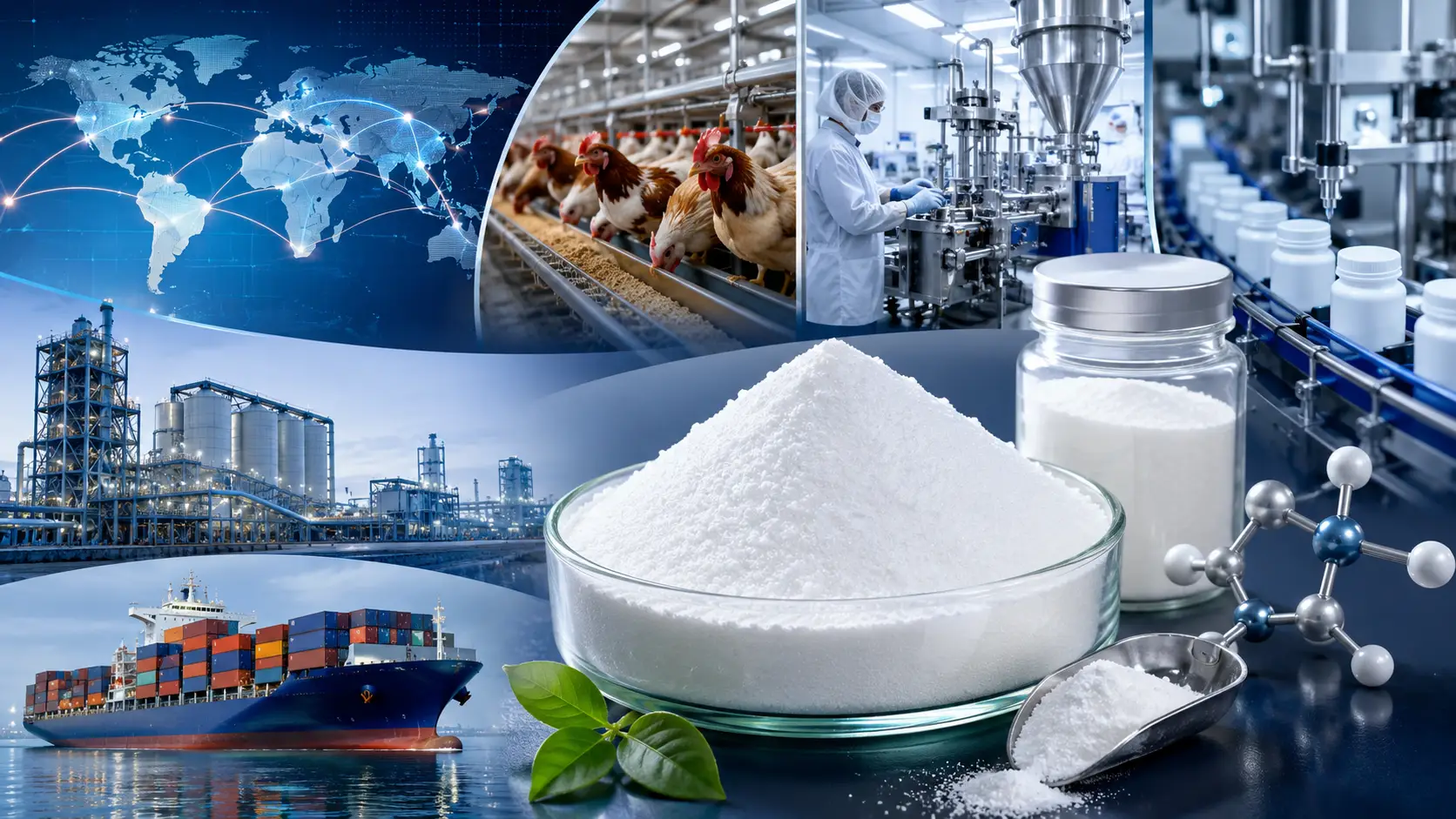
What Is Betaine Anhydrous and Why Is It Important?
Major Industrial Applications of Betaine Anhydrous
Market Demand Trends Driving Global Consumption
Key Buyer Groups and Procurement Considerations
Sourcing Strategies and Supply Chain Opportunities
Future Outlook for Betaine Anhydrous Markets
Conclusion
Betaine anhydrous is a naturally occurring compound commonly derived from sugar beet processing and widely utilized as a methyl donor and osmoprotectant in various industrial applications. Its multifunctional properties have made it an important ingredient across feed, food, nutraceutical, and pharmaceutical sectors.
The increasing demand for performance-enhancing nutritional ingredients has contributed to the growing commercial relevance of betaine anhydrous. Manufacturers value its versatility, stability, and compatibility with multiple formulation systems.
According to technical information published by the U.S. National Institutes of Health (NIH), betaine plays an important role in methylation processes and cellular osmotic regulation. These characteristics support its use in both animal and human nutrition applications.
As industries seek ingredients that improve efficiency, productivity, and formulation performance, betaine anhydrous continues to gain attention among manufacturers and procurement teams worldwide.
Betaine anhydrous serves multiple industries due to its physiological and functional benefits. Its broad application profile contributes significantly to global demand growth and commercial trade activity.
The ingredient is widely incorporated into feed formulations, dietary supplements, functional foods, and pharmaceutical products. Growing awareness of nutritional optimization has further strengthened its industrial value.
According to research published by the Food and Agriculture Organization (FAO), feed efficiency remains a key priority for livestock producers globally. Betaine anhydrous is frequently used in poultry, swine, and aquaculture feed to support animal performance and productivity.
In the human nutrition sector, manufacturers use betaine anhydrous in sports nutrition products and dietary supplements. Technical studies published in scientific journals have highlighted its role in supporting metabolic functions, making it attractive for nutraceutical product development.
The global market for specialty nutritional ingredients continues to expand as food security, animal productivity, and wellness trends influence purchasing decisions. Betaine anhydrous benefits from demand growth across several high-value sectors.
Rising livestock production, increasing nutraceutical consumption, and expanding functional food markets have created favorable conditions for long-term market expansion. Demand is particularly strong in regions with large feed manufacturing industries.
Market analysis published by organizations such as OECD-FAO Agricultural Outlook reports indicates continued growth in animal protein production worldwide. This trend directly supports demand for advanced feed additives, including betaine anhydrous.
At the same time, consumer interest in health-focused nutrition products has encouraged supplement manufacturers to expand ingredient portfolios. As a result, ingredient suppliers and distributors are actively increasing market coverage for betaine-based products.
Understanding buyer intent is essential for suppliers operating in the global chemical and ingredient marketplace. Betaine anhydrous attracts a diverse range of industrial buyers seeking consistent quality and reliable supply.
Procurement decisions are typically influenced by product specifications, regulatory compliance, manufacturing standards, and supplier reliability. Buyers often evaluate multiple suppliers before making long-term purchasing commitments.
Typical buyers include feed manufacturers, premix producers, nutraceutical brands, pharmaceutical companies, contract manufacturers, and ingredient distributors. These organizations require dependable sourcing channels to support continuous production operations.
Procurement teams commonly assess purity levels, technical documentation, supply consistency, logistics capabilities, and pricing competitiveness. Product pages on B2B marketplaces help buyers compare suppliers, review specifications, and identify sourcing opportunities more efficiently.
As international trade networks expand, sourcing strategies have become increasingly important for maintaining supply stability and cost efficiency. Betaine anhydrous procurement often involves global supplier evaluation and regional distribution partnerships.
Manufacturers and traders must navigate factors such as raw material availability, transportation costs, regulatory requirements, and inventory planning. Effective sourcing reduces operational risks while improving purchasing flexibility.
According to industry guidance from organizations involved in supply chain management and ingredient trade, long-term supplier relationships contribute significantly to procurement resilience. Buyers increasingly prioritize suppliers capable of providing technical support and stable delivery performance.
B2B chemical marketplaces simplify supplier discovery by connecting buyers with manufacturers, exporters, and distributors across multiple regions. This approach enhances market visibility and supports strategic sourcing decisions.
The future outlook for betaine anhydrous remains positive as demand drivers continue to strengthen across nutrition-related industries. Ongoing investments in animal production, wellness products, and functional ingredients are expected to support sustained market growth.
Industry participants are also focusing on product innovation and value-added formulations that leverage betaine's functional properties. These developments create new commercial opportunities for suppliers and distributors.
According to reports from agricultural and nutrition industry organizations, demand for feed efficiency solutions and advanced nutritional ingredients is expected to remain strong in both developed and emerging markets.
As global supply chains become more interconnected, companies that offer quality assurance, regulatory compliance, and reliable logistics capabilities will be better positioned to capture growth opportunities in the evolving betaine anhydrous market.
Betaine anhydrous has established itself as a valuable ingredient across feed, nutraceutical, food, and pharmaceutical industries. Its functional benefits, expanding application base, and growing market demand continue to attract attention from manufacturers, traders, distributors, and procurement teams.
For B2B buyers, successful sourcing depends on evaluating product quality, supplier reliability, regulatory compliance, and supply chain capabilities. As demand continues to increase globally, strategic sourcing through trusted chemical marketplaces can help businesses secure competitive supply opportunities and support long-term growth.
We're committed to your privacy. Tradeasia uses the information you provide to us to contact you about our relevant content, products, and services. For more information, check out our privacy policy.


 English
 Indonesian
 简体字
简体字
 العربية
 Español
 Français
 Português
 日本語
日本語
 한국어
한국어
 Tiếng Việt



















