Explore our network of country and industry based websites to access localized information, product offerings, and business services across our group.
Log in to start sending quotation requests for any product.
Don't have an account? Sign Up Here
Home Blood Meal Guide: Applications, Buyer Demand, and Global Supply Opportunities
Trade Insights | Applications and Buyers | 18 June 2026

What Is Blood Meal and Why Is It Important?
Industrial Applications of Blood Meal
Market Trends Driving Blood Meal Demand
Buyer Intent and Procurement Considerations
Global Supply Chain and Sourcing Opportunities
Future Outlook for Blood Meal Markets
Conclusion
Sources
Blood meal is a high-protein by-product generated from the processing of animal blood collected during livestock slaughter operations. Through drying and sterilization processes, the material is converted into a stable powder suitable for industrial use.
The product is valued primarily for its exceptionally high protein and nitrogen content, making it attractive for agricultural and feed-related applications. Its nutrient concentration often exceeds many alternative organic materials available in the market.
According to technical information published by the Food and Agriculture Organization (FAO), animal by-products continue to play an important role in improving resource efficiency and supporting agricultural production systems.
As sustainability becomes increasingly important across supply chains, blood meal represents an example of circular economy utilization where biological waste streams are converted into valuable commercial products.
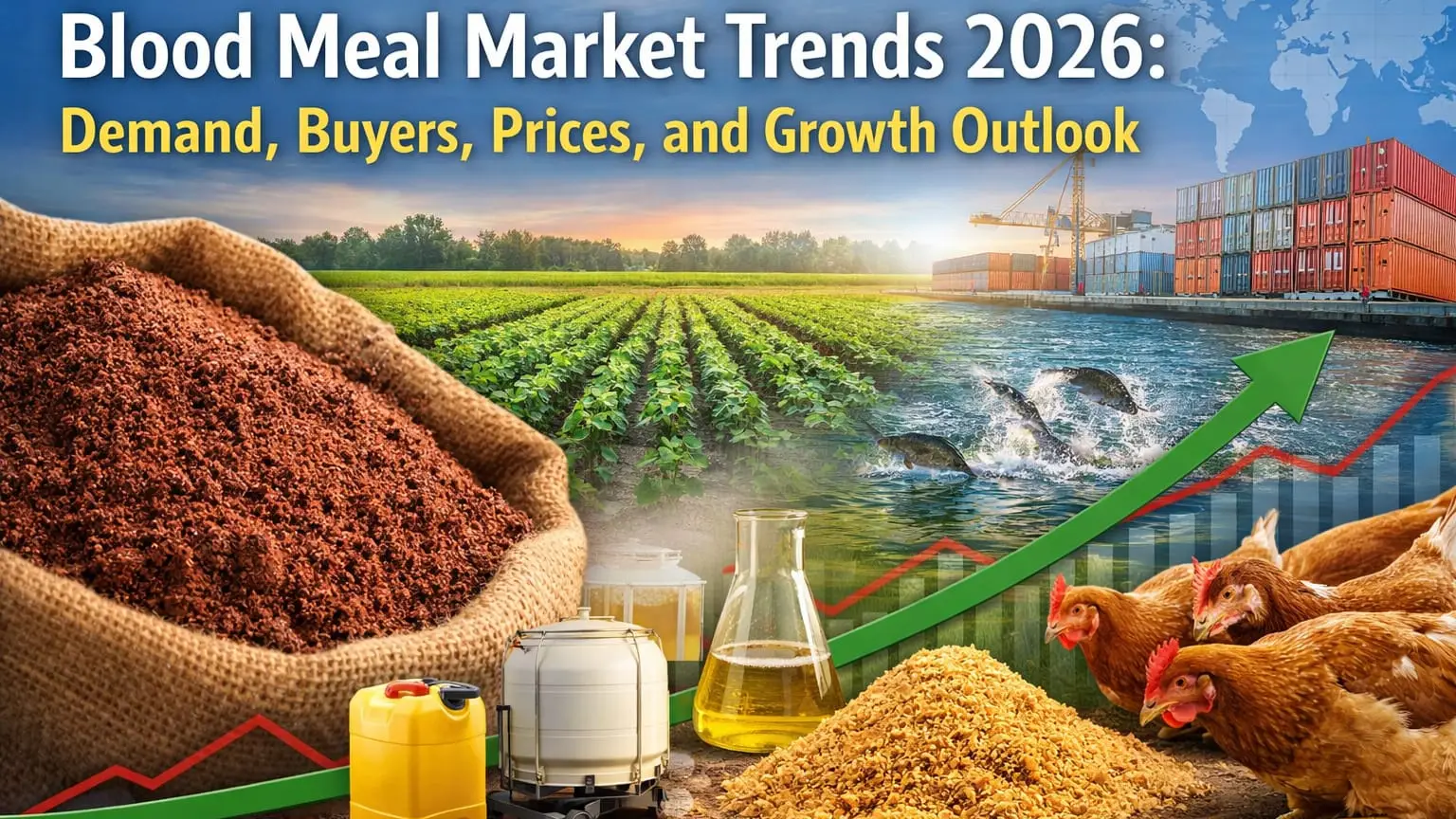
One of the most significant applications of blood meal is within animal nutrition. Its high protein concentration makes it a valuable ingredient in selected livestock, aquaculture, and pet nutrition formulations where protein supplementation is required.
Blood meal is also widely utilized in organic fertilizer manufacturing due to its high nitrogen content. The product supports plant growth and is commonly used in horticulture, specialty agriculture, and commercial crop production.
Technical guidance from the United States Department of Agriculture (USDA) identifies organic nutrient sources as important inputs for sustainable agricultural systems and soil fertility management.
The dual-use capability of blood meal across feed and fertilizer sectors provides suppliers and distributors with diversified market opportunities and reduces dependence on a single end-use industry.
Demand for blood meal is increasingly influenced by global sustainability initiatives that encourage the efficient utilization of agricultural by-products. Manufacturers are seeking solutions that reduce waste while generating additional economic value.
Growing interest in organic farming has further strengthened market demand. Producers are actively searching for nitrogen-rich organic fertilizers capable of supporting crop productivity while complying with organic production standards.
According to market observations published by the Organisation for Economic Co-operation and Development (OECD) and the FAO agricultural outlook programs, demand for livestock products and agricultural productivity improvements continues to influence feed ingredient and fertilizer consumption patterns.
In parallel, rising awareness regarding circular economy principles is encouraging procurement teams to evaluate sustainable raw materials that align with environmental, social, and governance objectives.
Typical buyers of blood meal include fertilizer manufacturers, feed producers, agricultural input suppliers, livestock nutrition companies, distributors, and commodity trading organizations.
Procurement departments generally assess product specifications such as protein content, nitrogen concentration, moisture levels, processing methods, microbiological quality, and regulatory compliance before finalizing purchasing decisions.
Industry guidance from the World Organisation for Animal Health (WOAH) emphasizes the importance of quality control and safe processing practices for animal-derived materials used within international trade environments.
Buyers frequently compare suppliers based on consistency, traceability, logistics capabilities, export experience, certification support, and long-term supply reliability. A well-structured product page assists sourcing teams by providing transparent specifications, documentation, and procurement information needed for supplier evaluation.
Blood meal supply is closely linked to livestock processing industries, particularly in regions with large-scale cattle, poultry, and swine production. These regions often serve as major production hubs for international markets.
Export opportunities continue to expand as demand grows across agricultural economies seeking protein-rich feed ingredients and organic nutrient solutions. Importers frequently source through specialized traders and agricultural commodity suppliers.
According to reports and trade statistics published by the International Trade Centre (ITC), agricultural commodity trade remains an important component of global food and agricultural supply chains.
For manufacturers and distributors, maintaining strong sourcing networks and diversified supplier portfolios can help mitigate risks associated with regional production fluctuations, logistics disruptions, and regulatory changes.
The long-term outlook for blood meal remains closely tied to growth in agriculture, animal nutrition, and sustainable farming practices. Increasing global food demand continues to support investment in productivity-enhancing agricultural inputs.
Innovation in fertilizer formulations may create additional demand for organic nutrient sources that improve soil health while supporting crop yields. Blood meal is well positioned within this trend due to its nutrient density.
Research supported by organizations such as the FAO and agricultural research institutions continues to highlight the importance of nutrient recycling and resource efficiency in future food production systems.
As sustainability requirements become more prominent across procurement policies, blood meal suppliers that demonstrate quality assurance, traceability, and reliable supply capabilities are likely to benefit from expanding market opportunities.
Blood meal has established itself as a valuable industrial material serving both feed and fertilizer markets. Its high protein and nitrogen content support a diverse range of commercial applications while contributing to resource efficiency objectives.
The product's relevance continues to grow alongside trends in sustainable agriculture, organic farming, and circular economy practices. These factors are strengthening demand among manufacturers, distributors, and agricultural input suppliers.
For procurement professionals, supplier evaluation extends beyond price considerations to include product quality, regulatory compliance, logistics reliability, and long-term supply security.
Organizations seeking dependable sourcing solutions can benefit from leveraging specialized B2B marketplaces that connect buyers with qualified blood meal manufacturers, exporters, and distributors worldwide.
We're committed to your privacy. Tradeasia uses the information you provide to us to contact you about our relevant content, products, and services. For more information, check out our privacy policy.


 English
 Indonesian
 简体字
简体字
 العربية
 Español
 Français
 Português
 日本語
日本語
 한국어
한국어
 Tiếng Việt