Explore our network of country and industry based websites to access localized information, product offerings, and business services across our group.
Log in to start sending quotation requests for any product.
Don't have an account? Sign Up Here
Home Cottonseed Meal Sourcing Guide: Applications, Buyers, and Market Outlook
Trade Insights | Applications and Buyers | 12 June 2026
What Is Cottonseed Meal?
Industrial Applications Driving Cottonseed Meal Demand
Global Market Trends and Industry Outlook
Key Buyer Groups and Procurement Requirements
Cottonseed Meal Sourcing Considerations for B2B Buyers
Supplier Evaluation and Supply Chain Factors
Buyer Intent and Commercial Purchasing Decisions
Conclusion
Sources
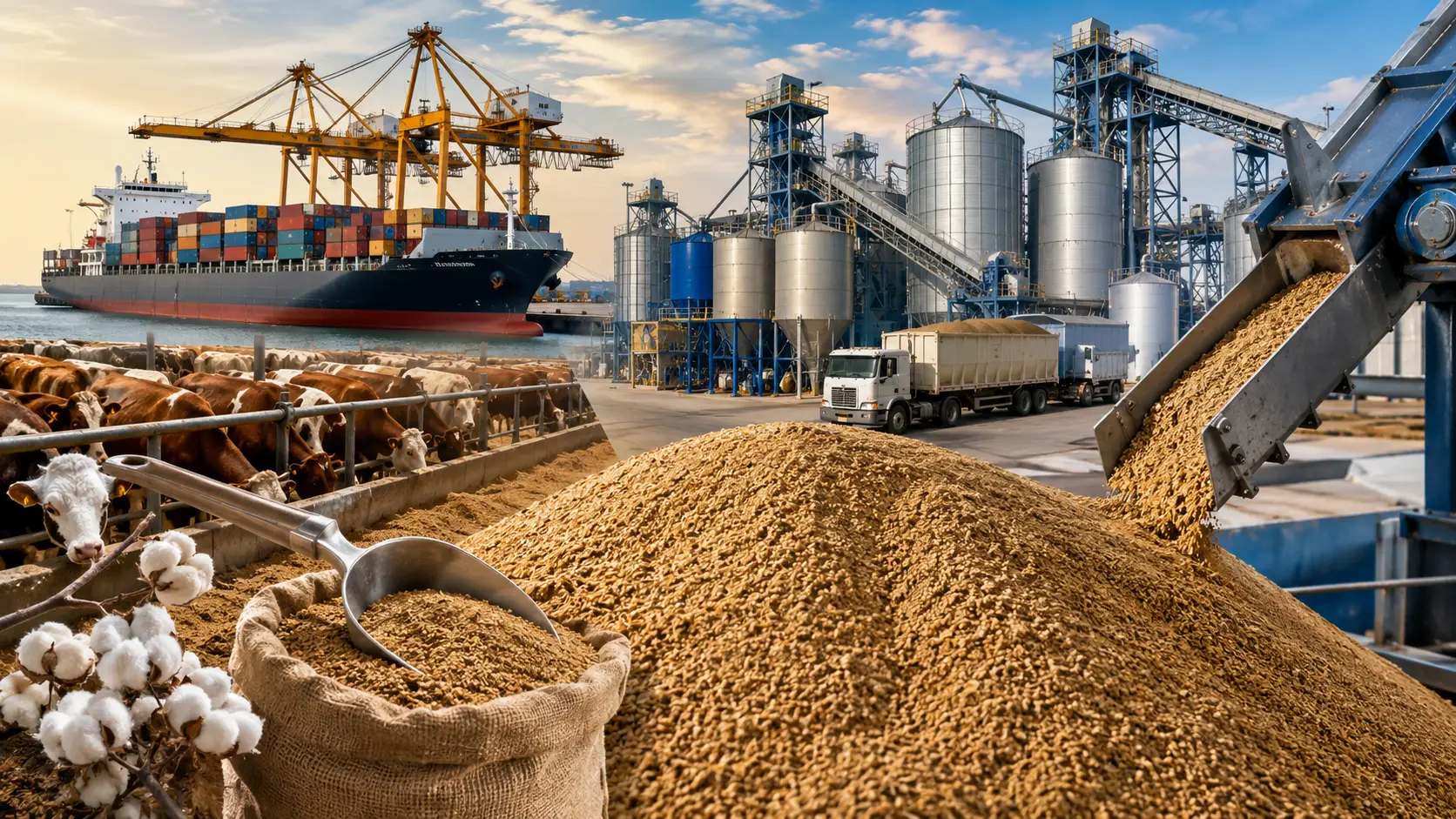
Cottonseed meal is a high-protein co-product generated during the extraction of oil from cottonseed. It is widely utilized as a protein-rich ingredient in animal feed formulations, particularly for ruminants and other livestock species. Its nutritional value and availability have made it an important component of global feed supply chains.
The product typically contains significant levels of protein, fiber, and residual energy, making it attractive for feed manufacturers seeking cost-effective protein supplementation. Nutritional profiles can vary depending on processing methods and cotton varieties used during production.
According to technical information published by the Food and Agriculture Organization (FAO), cottonseed-derived feed ingredients contribute substantially to livestock nutrition programs in many agricultural regions due to their protein content and broad availability.
As global livestock production expands, cottonseed meal continues to serve as an alternative protein source alongside soybean meal and other oilseed-derived feed ingredients, supporting diverse feed formulations across international markets.
The primary commercial application of cottonseed meal is in livestock feed manufacturing, where it serves as a valuable protein supplement. Demand is closely linked to growth in meat, dairy, and animal husbandry industries worldwide.
Feed manufacturers commonly incorporate cottonseed meal into ruminant diets, particularly for dairy cattle and beef cattle. Its protein contribution helps support animal growth, milk production, and overall feed efficiency when used appropriately within balanced nutritional programs.
According to research published through the United States Department of Agriculture, protein-rich feed ingredients remain critical components in modern livestock production systems, supporting increasing global demand for animal protein products.
Beyond cattle nutrition, cottonseed meal may also be included in feed formulations for sheep, goats, and selected aquaculture applications where nutritional specifications permit its use.
The continued expansion of commercial livestock operations in developing and developed markets supports long-term demand for dependable feed protein ingredients such as cottonseed meal.
Cottonseed meal demand is influenced by agricultural production levels, feed ingredient pricing, livestock population growth, and regional feed manufacturing activity. Market participants closely monitor these factors when planning procurement strategies.
Volatility in traditional feed protein markets has encouraged manufacturers to diversify ingredient sourcing. Cottonseed meal has gained attention as buyers seek alternative protein sources that can improve supply resilience and cost management.
Market analysis published by organizations such as the Organisation for Economic Co-operation and Development and FAO highlights continued growth in global feed consumption driven by rising meat and dairy production.
Emerging livestock sectors in Asia, Africa, and Latin America are increasing demand for feed ingredients, creating additional opportunities for cottonseed meal suppliers and exporters.
The market outlook remains supported by ongoing investments in feed production infrastructure and increasing emphasis on efficient livestock nutrition.
A diverse range of commercial buyers participate in the cottonseed meal market. Their purchasing decisions are influenced by nutritional specifications, supply reliability, regulatory compliance, and commercial competitiveness.
Feed manufacturers represent the largest buyer segment, purchasing cottonseed meal for incorporation into compound feed products. These companies often procure in bulk volumes under long-term supply agreements.
According to industry data from FAO and agricultural commodity trade organizations, livestock producers, feed distributors, agricultural cooperatives, and integrated farming operations also contribute significantly to market demand.
International traders frequently source cottonseed meal for redistribution into regional feed markets where domestic production may not satisfy demand requirements.
As procurement teams become increasingly focused on supply chain efficiency, suppliers that demonstrate consistency and transparency gain stronger competitive positioning.
Strategic sourcing requires evaluation of multiple technical and commercial factors. Buyers must balance quality requirements with pricing, logistics, and supply security objectives.
Protein content, moisture levels, fiber composition, processing methods, and contaminant management are among the most important parameters evaluated during supplier qualification processes.
Technical guidance from agricultural research institutions indicates that feed ingredient consistency plays a critical role in maintaining formulation accuracy and production efficiency across feed manufacturing operations.
International buyers often request certificates of analysis, quality assurance documentation, and traceability records before approving suppliers for ongoing procurement programs.
Logistics capabilities also influence sourcing decisions, particularly for buyers managing large-volume imports or regional distribution networks.
Reliable suppliers contribute significantly to procurement success. In competitive feed ingredient markets, supply continuity and operational performance often carry equal importance to pricing.
Procurement teams typically assess supplier production capacity, export experience, inventory management capabilities, and historical delivery performance before establishing commercial agreements.
According to commodity market reporting from reputable agricultural trade publications, supply chain disruptions can affect feed ingredient availability and pricing across multiple regions.
Long-term partnerships with qualified producers and distributors can help buyers reduce procurement risk while improving forecasting accuracy and inventory planning.
Companies that maintain diversified sourcing networks are often better positioned to respond to market fluctuations and changing demand conditions.
Understanding buyer intent is essential for successful participation in the cottonseed meal market. Commercial purchasers evaluate products through both technical and strategic procurement frameworks.
Typical buyers include feed manufacturers, livestock nutrition companies, agricultural distributors, commodity traders, and integrated farming enterprises. Each buyer group seeks dependable supply and predictable product performance.
Industry procurement practices indicate that buyers compare suppliers based on quality consistency, protein specifications, documentation, logistics capabilities, commercial terms, and long-term supply reliability.
Procurement teams frequently evaluate multiple suppliers before making purchasing decisions because feed ingredient performance directly affects production efficiency and profitability.
A well-structured product page supports sourcing decisions by providing technical specifications, application information, supply availability, and commercial inquiry channels that facilitate efficient buyer engagement.
Cottonseed meal continues to play an important role in the global livestock feed industry as manufacturers seek reliable and cost-effective protein ingredients. Its applications across ruminant nutrition and broader feed production support sustained commercial relevance.
Growing demand for animal protein products, expanding feed manufacturing capacity, and increasing emphasis on supply chain resilience are expected to support future market opportunities.
Industry data from organizations such as FAO, USDA, and OECD indicate that feed ingredient markets will remain strategically important to agricultural production systems worldwide.
For procurement teams, distributors, and feed manufacturers, effective cottonseed meal sourcing strategies can contribute to stable operations, improved cost management, and long-term supply security.
We're committed to your privacy. Tradeasia uses the information you provide to us to contact you about our relevant content, products, and services. For more information, check out our privacy policy.


 English
 Indonesian
 简体字
简体字
 العربية
 Español
 Français
 Português
 日本語
日本語
 한국어
한국어
 Tiếng Việt



















