Explore our network of country and industry based websites to access localized information, product offerings, and business services across our group.
Log in to start sending quotation requests for any product.
Don't have an account? Sign Up Here
Home L-Valine Sourcing Guide: Supply Chain, Applications, and Buyer Insights
Trade Insights | Applications and Buyers | 08 June 2026
What Is L-Valine and Why Is It Important?
Major Industrial Applications of L-Valine
Market Demand and Industry Growth Drivers
Key Buyer Groups and Procurement Considerations
Global Supply Chain and Sourcing Opportunities
Buyer Intent and Supplier Evaluation Criteria
Future Outlook for the L-Valine Market
Conclusion
Sources
L-Valine is an essential branched-chain amino acid (BCAA) widely used in nutrition, feed, pharmaceutical, and biotechnology industries. Because animals and humans cannot synthesize it naturally, it must be supplied through diet or supplementation, making it a commercially important amino acid in global markets.
According to the United States National Institutes of Health (NIH), branched-chain amino acids play critical roles in protein synthesis, muscle metabolism, and physiological functions. This importance continues to support demand for L-Valine across multiple industrial sectors.
The commercialization of amino acid production through fermentation technologies has transformed L-Valine into a strategic ingredient for manufacturers seeking nutritional performance, production efficiency, and product differentiation.
As industries increasingly focus on optimized nutrition formulations and sustainable production systems, L-Valine has become an essential component in both human and animal nutrition value chains.
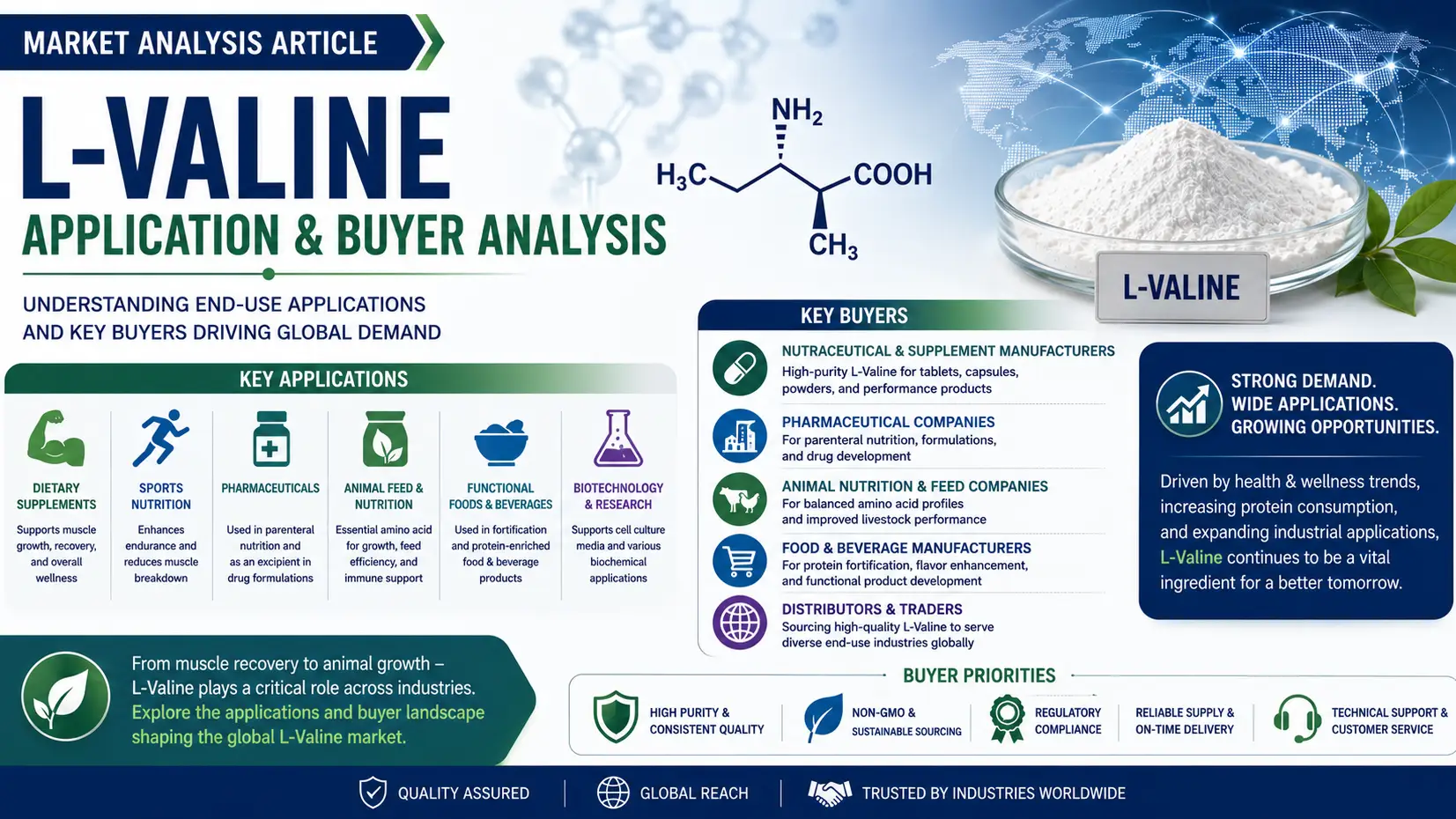
L-Valine serves a broad range of industrial applications due to its nutritional and functional characteristics. Its versatility allows manufacturers to incorporate it into products designed for growth performance, nutritional enhancement, and specialized formulations.
Technical information published by scientific journals and food ingredient organizations highlights the growing importance of amino acids in precision nutrition and performance-based formulations.
Animal nutrition remains one of the largest application segments for L-Valine. Feed manufacturers utilize the amino acid to optimize protein utilization, improve growth performance, and support efficient feed conversion ratios in poultry, swine, and aquaculture operations.
The increasing adoption of low-protein feed formulations has strengthened demand for supplemental amino acids such as L-Valine, helping producers maintain animal performance while reducing overall nitrogen emissions.
In nutraceutical formulations, L-Valine is frequently incorporated into BCAA blends, sports nutrition products, and wellness supplements targeting active consumers and athletes.
Growing consumer awareness of fitness, muscle recovery, and performance nutrition continues to create opportunities for ingredient suppliers and manufacturers serving global supplement markets.
Global demand for amino acids has expanded steadily as industries seek advanced nutritional solutions for both humans and animals. L-Valine benefits from long-term trends including population growth, protein consumption, and increasing focus on nutritional efficiency.
Market analyses published by organizations such as the Food and Agriculture Organization (FAO) and industry research providers indicate that feed additives and nutritional ingredients remain key growth segments worldwide.
Precision nutrition strategies have encouraged manufacturers to formulate products using specific amino acid profiles rather than relying solely on crude protein content.
This shift supports greater use of L-Valine because it enables formulators to achieve targeted nutritional outcomes while improving cost efficiency and sustainability objectives.
The continued expansion of sports nutrition and functional food categories contributes to rising demand for amino acid ingredients. Manufacturers increasingly seek reliable supplies of high-purity L-Valine for premium product development.
As consumers prioritize health, wellness, and performance, ingredient suppliers are experiencing growing inquiries from brands developing advanced nutritional formulations.
The L-Valine market serves a diverse range of industrial buyers, each with unique quality specifications and sourcing requirements. Understanding buyer priorities is critical for suppliers seeking long-term commercial relationships.
According to industry procurement practices within feed, food, and pharmaceutical sectors, supplier reliability and regulatory compliance remain central purchasing considerations.
Major buyers include animal feed manufacturers, premix producers, nutraceutical companies, pharmaceutical manufacturers, contract manufacturers, ingredient distributors, and specialty chemical traders.
These organizations typically purchase L-Valine in bulk quantities to support large-scale production operations and supply chain continuity.
Procurement teams evaluate purity, production method, consistency, certifications, traceability, and documentation when selecting suppliers.
Reliable quality control systems and transparent manufacturing practices can significantly influence supplier qualification and long-term purchasing decisions.
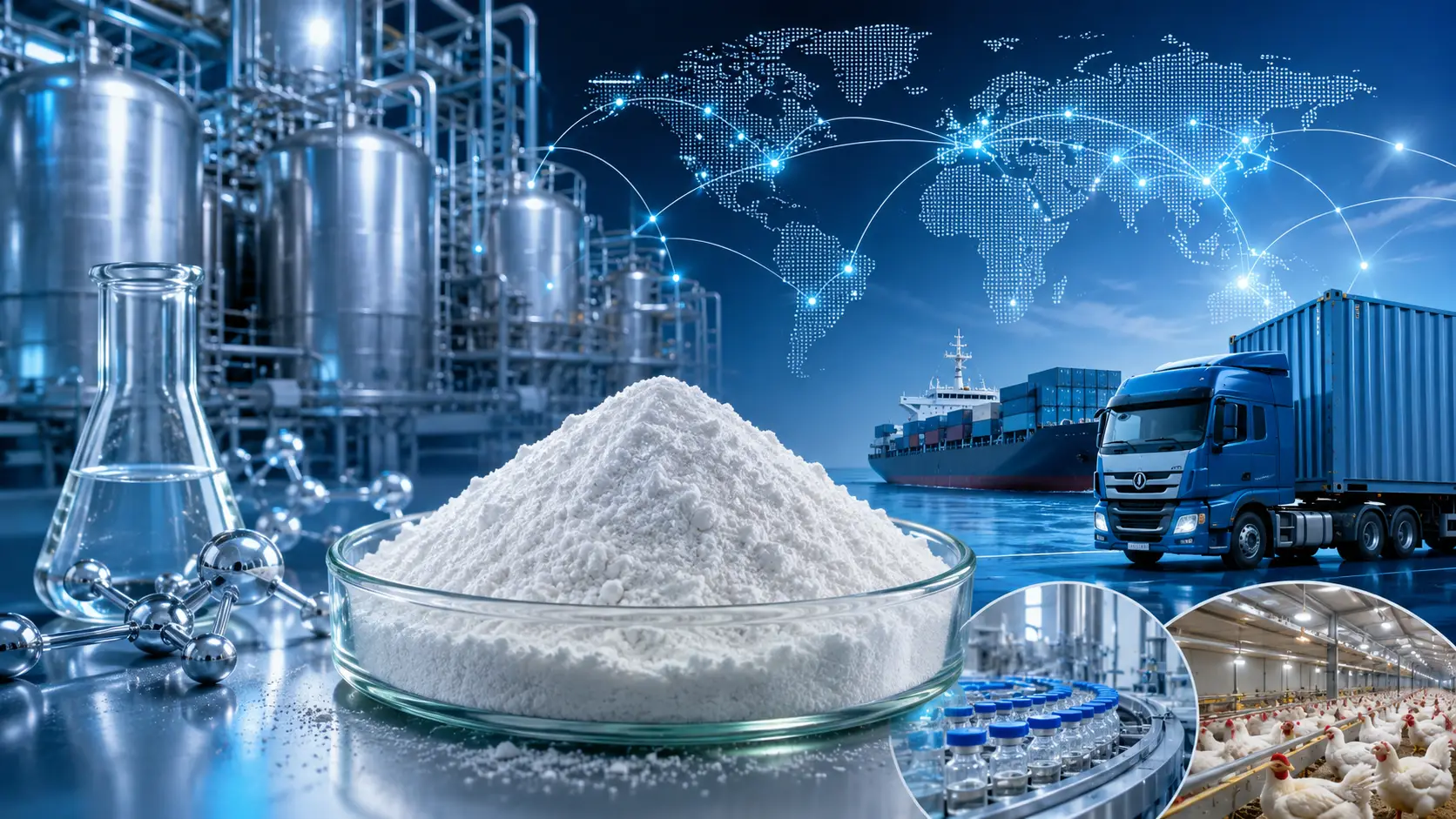
The global L-Valine supply chain is closely linked to fermentation technology, biotechnology advancements, and international amino acid manufacturing capacity. Production is concentrated in regions with strong biochemical manufacturing infrastructure.
Industry reports from agricultural and biotechnology sectors indicate that Asia remains a major production hub for amino acids due to scale efficiencies and established manufacturing ecosystems.
Global trade networks allow L-Valine suppliers to serve customers across feed, food, pharmaceutical, and industrial markets. International distributors play an important role in connecting manufacturers with regional buyers.
Supply chain diversification has become increasingly important as procurement teams seek to reduce sourcing risks and maintain stable inventory levels.
Chemical distributors and trading companies continue to identify opportunities in emerging markets where nutritional industries are expanding rapidly.
The growing need for specialized ingredients creates favorable conditions for suppliers capable of offering competitive pricing, technical support, and dependable logistics solutions.
Buyers searching for L-Valine often have clear commercial objectives related to production efficiency, formulation performance, or supply chain optimization. As a result, sourcing decisions typically involve extensive supplier comparisons.
Industry purchasing professionals frequently conduct evaluations based on both technical specifications and commercial factors before finalizing procurement agreements.
Procurement teams typically review product purity, manufacturing standards, supply stability, lead times, packaging options, and regulatory compliance.
Buyers may also request technical documentation, certificates of analysis, and quality assurance records to verify supplier capabilities and product consistency.
Well-structured product pages help buyers evaluate whether a supplier can meet operational requirements and regulatory expectations.
Detailed technical information, application guidance, and sourcing support can accelerate purchasing decisions and improve supplier credibility within competitive markets.
The outlook for L-Valine remains positive as demand continues to expand across nutrition-focused industries. Increasing emphasis on efficiency, sustainability, and health-oriented products supports long-term growth opportunities.
Market research organizations consistently identify amino acids as important ingredients within evolving food, feed, and health sectors.
Advances in fermentation technologies are expected to improve production efficiency and support more sustainable manufacturing practices.
These developments may help producers meet rising global demand while addressing environmental and economic considerations.
Growing investments in livestock productivity, functional nutrition, and biotechnology are likely to create new opportunities for suppliers, distributors, and manufacturers involved in the L-Valine value chain.
Companies that establish resilient sourcing networks and maintain consistent product quality will be well positioned to benefit from future market expansion.
L-Valine has become an essential amino acid ingredient across animal nutrition, nutraceutical, pharmaceutical, and biotechnology industries. Its role in supporting protein synthesis and optimized nutritional formulations continues to drive global demand.
For B2B buyers, successful sourcing depends on evaluating supplier reliability, product quality, regulatory compliance, and supply chain stability. As global demand for advanced nutritional solutions grows, L-Valine will remain a strategically important ingredient for manufacturers, distributors, and procurement teams seeking long-term commercial opportunities.
We're committed to your privacy. Tradeasia uses the information you provide to us to contact you about our relevant content, products, and services. For more information, check out our privacy policy.


 English
 Indonesian
 简体字
简体字
 العربية
 Español
 Français
 Português
 日本語
日本語
 한국어
한국어
 Tiếng Việt