Explore our network of country and industry based websites to access localized information, product offerings, and business services across our group.
Log in to start sending quotation requests for any product.
Don't have an account? Sign Up Here
Home Linseed Meal Sourcing Guide: Buyers, Supply Chain, and Market Use
Trade Insights | Applications and Buyers | 10 June 2026

Overview of Linseed Meal in Global Feed Markets
Production and Processing of Linseed Meal
Industrial Applications of Linseed Meal
Buyer Intent Analysis for Linseed Meal Procurement
Key Buyers and Procurement Requirements
Market Trends and Global Demand Outlook
B2B Sourcing Strategy and Supply Chain Considerations
Conclusion and Strategic Outlook
Sources
Linseed meal, a protein-rich by-product derived from flaxseed oil extraction, plays a significant role in global agricultural and feed industries. It is widely recognized for its high fiber content and moderate protein value, making it a valuable component in livestock feed formulations. According to the Food and Agriculture Organization (FAO), oilseed meals are among the most traded feed ingredients globally due to rising demand for sustainable protein sources in animal nutrition.
The nutritional profile of linseed meal makes it suitable for ruminants and certain poultry feed applications. Its digestibility characteristics and fiber structure allow it to complement other protein ingredients in feed blends. Researchers from agricultural universities and feed science institutions highlight its role in improving gut health in livestock when used appropriately in formulations.
Linseed meal’s value is also influenced by its residual oil content and processing method, which affect its energy contribution. Feed manufacturers often evaluate these parameters when selecting suppliers to ensure consistency in livestock performance outcomes. Its role continues to expand as alternative plant-based protein sources gain attention.
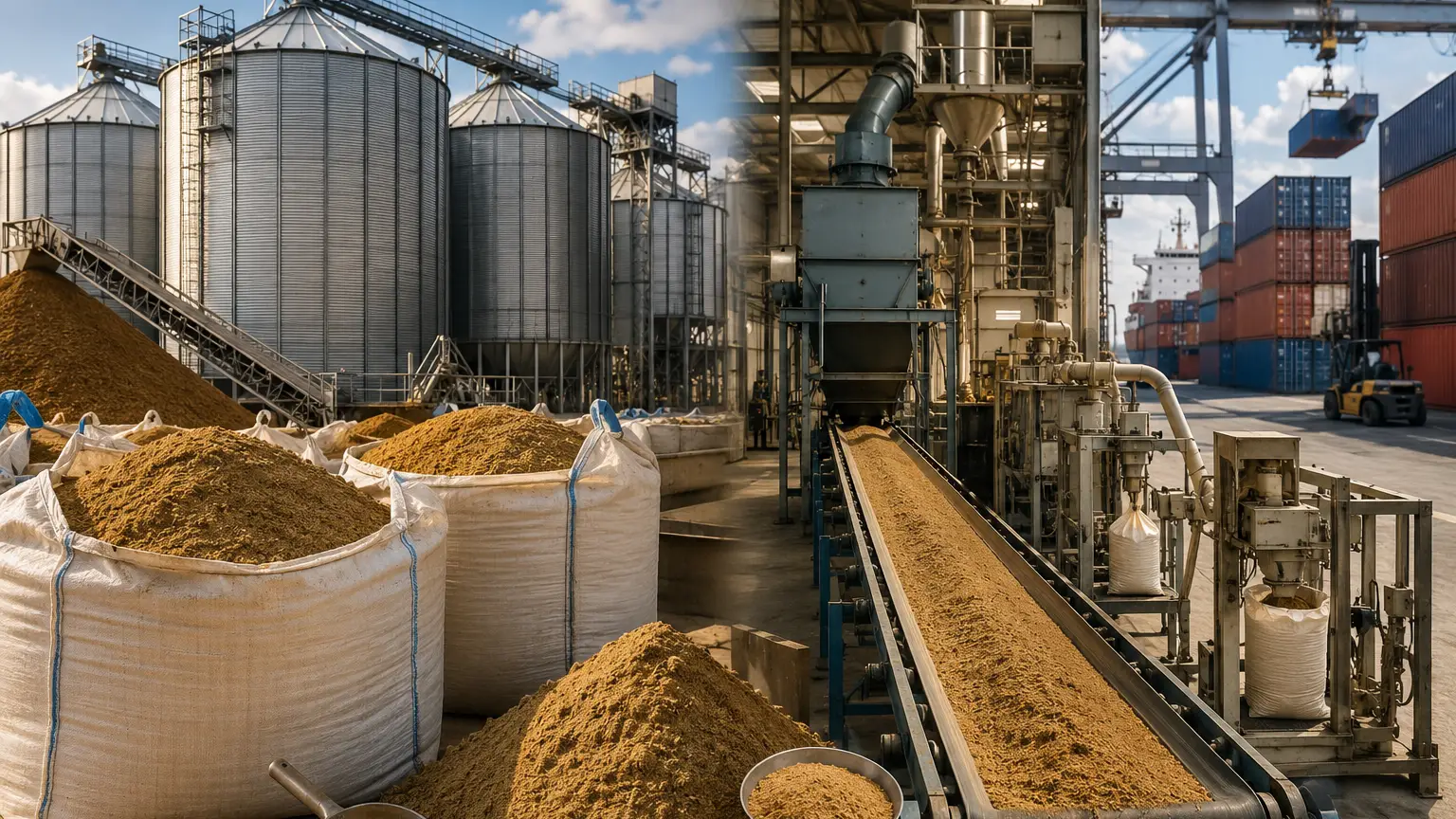
Linseed meal is produced after the mechanical or solvent extraction of oil from flaxseeds. The remaining solid fraction is processed, dried, and ground into meal form suitable for industrial use. According to technical reports from the United States Department of Agriculture (USDA), oilseed processing efficiency significantly impacts the quality and nutritional value of by-products like linseed meal.
Mechanical pressing typically produces a higher-fat residual meal, while solvent extraction yields a more defatted and protein-dense product. These differences directly influence feed formulation strategies and pricing in the global commodities market. Industrial processors choose methods based on end-user requirements and export specifications.
Quality control during production is essential for maintaining consistency in protein levels and moisture content. Export-oriented suppliers often implement strict grading systems to meet international feed standards, ensuring compatibility across diverse livestock markets.
Linseed meal is primarily used in animal feed manufacturing, especially for cattle, sheep, and other ruminants. Its fiber-rich composition supports digestive health and improves feed efficiency. Industry analysis from global feed associations indicates that oilseed meals are increasingly replacing traditional feed proteins due to cost and sustainability advantages.
In livestock nutrition, linseed meal is blended with other protein sources to balance amino acid profiles. It is commonly used in dairy and beef cattle diets to support milk production and weight gain. Poultry applications are more limited but still relevant in controlled formulations.
Beyond livestock, linseed meal is also explored in organic farming systems where natural feed inputs are preferred. Its compatibility with sustainable agriculture practices makes it a preferred ingredient in eco-certified feed production systems.
Buyer intent for linseed meal is strongly driven by demand in livestock feed manufacturing, agricultural trading, and commodity distribution networks. Procurement teams typically seek consistent supply, stable pricing, and verified nutritional quality when sourcing this ingredient. Market studies published by feed industry research groups highlight increasing demand for plant-based protein alternatives.
Buyers evaluate suppliers based on moisture content, protein levels, and contamination standards. Contract reliability and export capability are also critical factors, especially for large-scale feed manufacturers. Trade compliance and certification requirements often influence supplier selection.
In addition, buyers compare multiple suppliers to secure cost efficiency and logistics advantages. Digital B2B marketplaces now play a central role in connecting buyers with verified producers and exporters.
The main buyers of linseed meal include feed mills, livestock farms, animal nutrition companies, and agricultural distributors. These stakeholders rely on bulk procurement to maintain production efficiency and cost stability. Industry reports from agricultural trade organizations confirm that demand is concentrated in regions with strong livestock sectors.
Feed manufacturers integrate linseed meal into large-scale production systems requiring consistent supply chains. Distributors and traders act as intermediaries, facilitating cross-border trade and regional supply balancing. This creates a multi-layered procurement ecosystem.
Quality assurance, documentation, and traceability are key requirements for institutional buyers. Suppliers who meet these standards are more likely to secure long-term contracts in international markets.
Global demand for linseed meal continues to grow due to increasing livestock production and the shift toward sustainable feed ingredients. According to OECD-FAO agricultural outlook reports, oilseed meal consumption is expected to rise steadily as protein feed demand increases worldwide.
Sustainability trends are influencing feed formulation strategies, encouraging the use of plant-based by-products like linseed meal. This shift is supported by environmental concerns and the need to reduce reliance on conventional protein sources such as fishmeal and soybean meal.
Innovation in feed technology is also improving the utilization efficiency of linseed meal. Advanced processing and formulation techniques are expanding its applicability across different livestock categories.
Effective sourcing of linseed meal requires understanding global supply chains, seasonal availability, and regional production hubs. Major exporters often include countries with strong oilseed industries, where flaxseed processing is integrated into large-scale agricultural systems.
B2B buyers prioritize suppliers who can ensure stable export logistics and consistent product quality. Long-term contracts are common in this commodity due to price volatility in agricultural markets. Procurement teams also assess storage conditions and shipment reliability.
Digital sourcing platforms and chemical marketplaces such as Tradeasia, Chemtradeasia, and Tradechem play an important role in streamlining supplier discovery and procurement decisions.
Linseed meal continues to strengthen its position as a valuable feed ingredient in global agricultural supply chains. Its role in livestock nutrition, combined with increasing demand for sustainable protein sources, supports long-term market growth. Industry analysts expect steady expansion in both production and trade volumes.
For buyers, strategic sourcing will depend on supplier reliability, pricing stability, and compliance with feed safety standards. As global feed demand grows, linseed meal is likely to remain a key component in diversified feed formulations.
Its importance in B2B agricultural trade highlights the need for efficient procurement systems and strong supplier networks to ensure consistent availability in international markets.
https://www.oecd.org/agriculture
We're committed to your privacy. Tradeasia uses the information you provide to us to contact you about our relevant content, products, and services. For more information, check out our privacy policy.


 English
 Indonesian
 简体字
简体字
 العربية
 Español
 Français
 Português
 日本語
日本語
 한국어
한국어
 Tiếng Việt