Explore our network of country and industry based websites to access localized information, product offerings, and business services across our group.
Log in to start sending quotation requests for any product.
Don't have an account? Sign Up Here
Home Meat and Bone Meal Sourcing Guide for Feed Manufacturers and Global Buyers
Trade Insights | Applications and Buyers | 04 June 2026
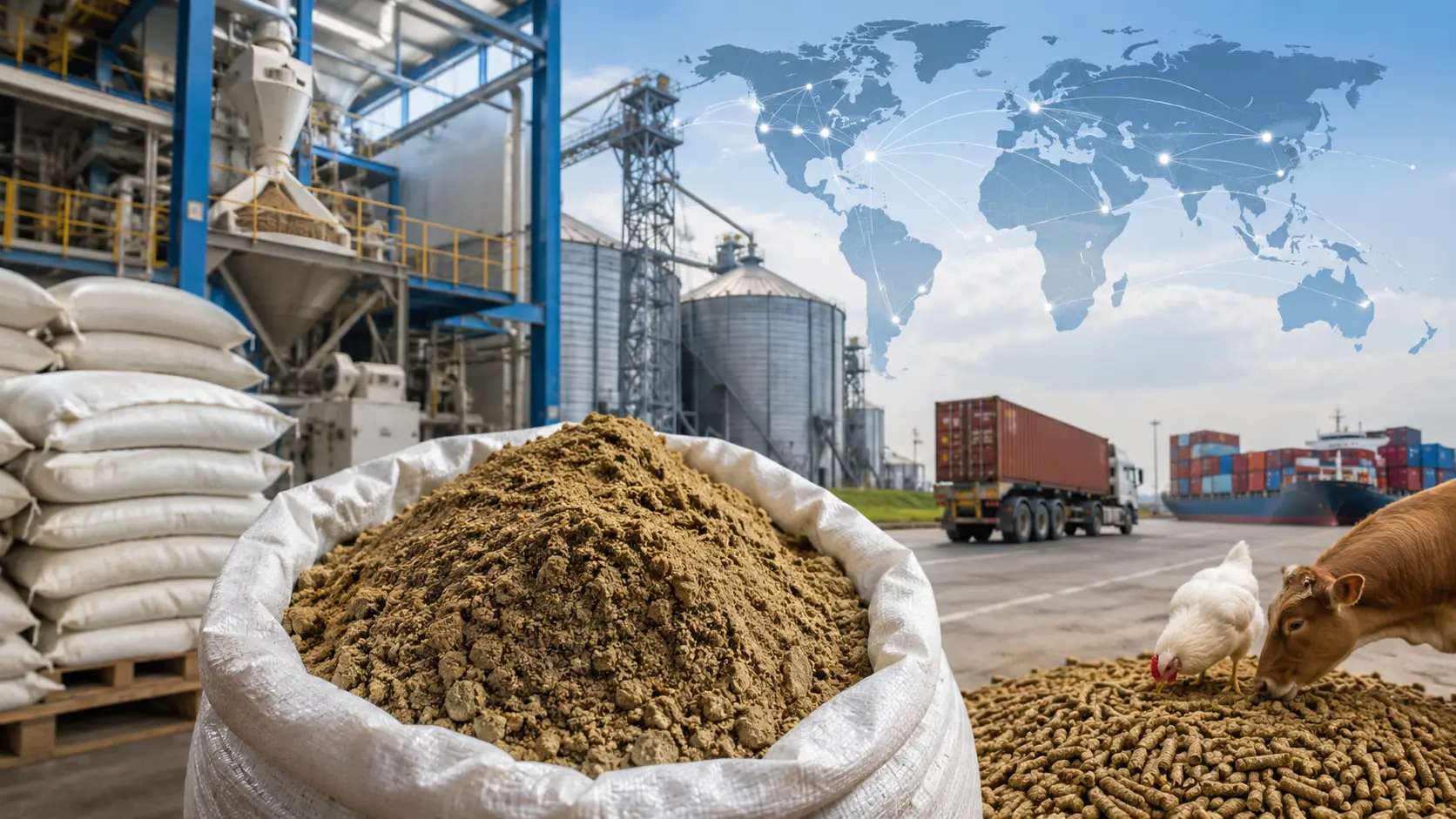
Understanding Meat and Bone Meal in the Feed Industry
Industrial Applications Driving Market Demand
Global Market Trends and Industry Outlook
Buyer Intent and Procurement Considerations
Evaluating Suppliers and Supply Chain Reliability
Opportunities Through B2B Chemical and Feed Ingredient Marketplaces
Conclusion
Meat and bone meal (MBM) is a rendered animal-derived protein ingredient produced through the processing of animal tissues and bones. It is widely utilized as a nutrient-dense feed component because it provides concentrated protein, phosphorus, calcium, and essential amino acids required for animal nutrition.
According to the Food and Agriculture Organization (FAO), rendered animal by-products play an important role in maximizing resource efficiency within agricultural production systems and reducing waste generated from livestock processing activities.
The nutritional profile of meat and bone meal varies depending on raw materials and rendering methods. Typical products contain significant levels of crude protein and mineral content, making them valuable feed ingredients in specific livestock and pet nutrition formulations.
Technical information published by industry organizations such as the North American Renderers Association (NARA) highlights that rendered products contribute essential nutrients while supporting sustainable utilization of animal processing by-products.
Feed manufacturers often incorporate meat and bone meal to balance nutrient requirements while optimizing formulation costs. Its combination of protein and mineral content makes it particularly attractive in markets where alternative nutrient sources may be more expensive or limited.
Market analysts from Rabobank and other agricultural research organizations continue to monitor the role of animal proteins in feed production as producers seek efficient and sustainable ingredient solutions for commercial livestock operations.
Demand for meat and bone meal is closely linked to growth in livestock production, companion animal nutrition, and agricultural sectors that require nutrient-rich feed ingredients. Its broad application base supports consistent commercial demand across multiple regions.
Industry reports from the Organisation for Economic Co-operation and Development (OECD) and FAO indicate that rising protein consumption globally continues to influence feed ingredient requirements throughout agricultural supply chains.
In many markets, meat and bone meal serves as a protein and mineral supplement in feed formulations for poultry, swine, aquaculture, and other livestock sectors where regulations permit its use. The ingredient contributes valuable nutrients that support growth and productivity.
Feed industry publications consistently identify protein ingredient availability and feed cost management as major factors influencing purchasing decisions among livestock feed manufacturers.
The pet food sector represents another significant application area. Manufacturers use animal-derived ingredients to meet nutritional requirements while delivering protein-rich formulations that align with consumer demand for premium pet nutrition products.
According to market research published by Grand View Research and Euromonitor, global pet food markets continue to expand, creating opportunities for suppliers of animal-derived protein ingredients and feed materials.
The global meat and bone meal market is influenced by livestock production trends, rendering industry capacity, regulatory developments, and demand for cost-effective feed ingredients. These factors collectively shape supply availability and trade flows.
Market analysis from Mordor Intelligence and agricultural commodity researchers suggests that feed ingredient procurement remains a strategic priority as producers seek stable sources of protein and mineral nutrition.
One of the most significant trends supporting meat and bone meal demand is the increasing emphasis on circular economy practices. Rendering converts by-products that might otherwise become waste into commercially valuable feed ingredients, supporting sustainability objectives throughout agricultural supply chains.
According to sustainability studies referenced by FAO and rendering industry associations, the utilization of rendered products contributes to resource efficiency and environmental performance improvements across the livestock sector.
Regional production capacity, livestock populations, and regulatory frameworks significantly affect market conditions. Countries with large meat processing industries often become major suppliers of rendered feed ingredients, supporting both domestic consumption and export opportunities.
Industry trade data reported by organizations such as the United States Department of Agriculture (USDA) and international trade agencies demonstrate the importance of cross-border supply networks in maintaining feed ingredient availability.
Organizations purchasing meat and bone meal typically seek reliable access to consistent product quality, regulatory compliance, and competitive pricing. Procurement decisions often involve both technical and commercial evaluations before supplier selection.
According to feed industry procurement studies, buyers increasingly focus on supplier transparency and supply chain reliability due to the growing complexity of global sourcing networks.
Primary buyers include feed manufacturers, livestock nutrition companies, pet food producers, agricultural distributors, ingredient traders, and integrated farming operations. These organizations require dependable ingredient supplies to maintain production schedules and meet nutritional specifications.
Commercial buyers often compare multiple suppliers to evaluate product consistency, certifications, logistics capabilities, and long-term partnership potential before entering procurement agreements.
Procurement teams typically review protein content, mineral composition, quality assurance procedures, origin documentation, compliance standards, and shipping capabilities. Reliable technical documentation is often essential for supporting purchasing decisions.
Product listings available through B2B sourcing platforms help buyers compare suppliers efficiently by providing product specifications, origin information, and commercial contact opportunities that simplify sourcing processes.
Supplier evaluation has become increasingly important as feed manufacturers seek to minimize operational risks and secure uninterrupted ingredient availability. Effective supplier assessment supports both quality management and long-term procurement efficiency.
Industry guidance from feed safety organizations emphasizes the importance of supplier verification programs, documentation review, and quality assurance systems throughout feed ingredient sourcing activities.
Buyers often prioritize suppliers that maintain recognized quality management systems and adhere to applicable feed safety requirements. Compliance documentation can help reduce procurement risks while supporting regulatory obligations.
Organizations such as the International Feed Industry Federation (IFIF) continue to advocate for robust feed safety practices that improve transparency and consistency throughout global supply chains.
Reliable logistics capabilities remain a critical factor when selecting suppliers. Delays, inventory shortages, and transportation disruptions can significantly impact production schedules and operational costs.
Market intelligence from agricultural logistics analysts highlights the growing importance of diversified sourcing strategies as companies seek resilience against global supply chain disruptions.
Digital sourcing platforms are transforming how feed manufacturers identify suppliers and evaluate procurement opportunities. B2B marketplaces provide access to global supplier networks, enabling buyers to compare options more efficiently than traditional sourcing methods.
Research published by McKinsey & Company indicates that digital procurement adoption continues to increase across industrial sectors as organizations pursue improved sourcing efficiency and supplier visibility.
B2B marketplaces help buyers discover new suppliers, compare product offerings, review technical information, and streamline supplier outreach. These capabilities can reduce sourcing timelines while improving procurement decision-making.
For organizations seeking meat and bone meal suppliers, platforms such as Tradeasia, Chemtradeasia, and Tradechem Marketplace provide access to international sourcing opportunities across multiple regions and supply networks.
Suppliers also benefit from increased visibility among qualified industrial buyers. Marketplace participation enables manufacturers, exporters, and distributors to connect with procurement teams actively seeking feed ingredients and agricultural raw materials.
As digital procurement continues to evolve, B2B marketplaces are expected to play an increasingly important role in connecting global buyers and suppliers within the feed ingredient sector.
Meat and bone meal remains an important feed ingredient within global livestock, pet food, and agricultural industries due to its nutritional value and contribution to resource efficiency. Demand continues to be supported by expanding animal nutrition requirements and ongoing efforts to optimize feed formulation economics.
For procurement professionals, sourcing success depends on evaluating product quality, supplier reliability, regulatory compliance, and supply chain performance. As digital procurement tools become more widely adopted, B2B marketplaces offer valuable opportunities for identifying qualified suppliers and supporting informed purchasing decisions in the global meat and bone meal market.
https://www.fao.org/4/y5019e/y5019e03.htm (FAOHome)
https://www.woah.org/en/what-we-do/animal-health-and-welfare/animal-feed-safety/
We're committed to your privacy. Tradeasia uses the information you provide to us to contact you about our relevant content, products, and services. For more information, check out our privacy policy.


 English
 Indonesian
 简体字
简体字
 العربية
 Español
 Français
 Português
 日本語
日本語
 한국어
한국어
 Tiếng Việt



















