Explore our network of country and industry based websites to access localized information, product offerings, and business services across our group.
Log in to start sending quotation requests for any product.
Don't have an account? Sign Up Here
Home Soy Protein Concentrate Applications and Buyer Trends in Feed Markets
Trade Insights | Applications and Buyers | 03 June 2026
What Is Soy Protein Concentrate?
Growing Industrial Applications Across Food and Feed Industries
Market Trends Driving Soy Protein Concentrate Demand
Key Buyer Groups and Procurement Requirements
Sourcing Considerations for Global B2B Buyers
Future Opportunities and Market Outlook
Conclusion
Sources
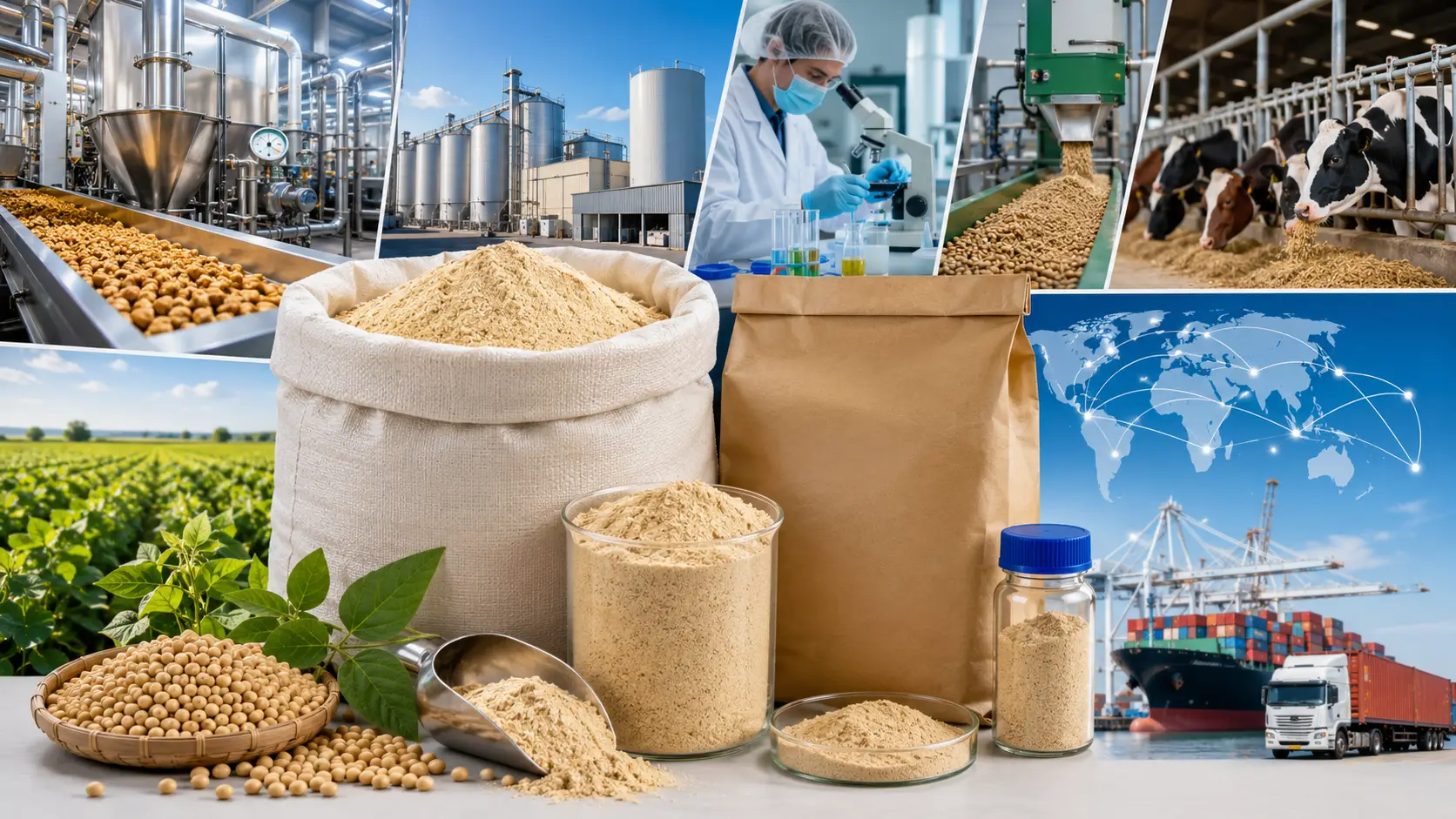
Soy protein concentrate (SPC) is a high-protein ingredient produced from defatted soybean meal through processes that remove soluble carbohydrates while retaining most of the protein content. The resulting ingredient typically contains around 65–70% protein and is widely used in food and feed formulations.
According to technical information published by the Food and Agriculture Organization, soy-derived proteins remain among the most important plant-based protein sources globally due to their nutritional profile, functional properties, and commercial availability.
Soy protein concentrate offers desirable characteristics including protein enrichment, water-binding capacity, emulsification properties, and improved texture performance in formulated products. These functional attributes allow manufacturers to optimize product quality while controlling production costs.
Industry research from the United States Soybean Export Council highlights that soy protein ingredients continue to play a critical role in food innovation and livestock nutrition due to their consistency, scalability, and established global supply chains.
The versatility of soy protein concentrate has enabled its adoption across multiple industrial sectors. Food manufacturers utilize SPC in meat alternatives, processed meats, bakery products, dairy alternatives, nutritional supplements, and functional foods where protein fortification is required.
Market assessments from Institute of Food Technologists indicate that demand for plant-based proteins has expanded significantly as manufacturers seek ingredients that support both nutritional value and product functionality.
Animal feed producers represent another major consumer group for soy protein concentrate. SPC is frequently incorporated into aquaculture feeds, pet foods, swine diets, poultry nutrition, and specialty livestock formulations requiring highly digestible protein sources.
Technical evaluations published by the American Feed Industry Association demonstrate that concentrated soy proteins are valued for supporting balanced nutrition, feed efficiency, and consistent formulation performance in commercial feed production.
Global interest in sustainable protein sources continues to influence purchasing behavior among manufacturers. Soy protein concentrate benefits from established agricultural production networks and a long history of commercial use, making it an attractive option for companies seeking reliable plant-based ingredients.
According to market analysis published by OECD and the Food and Agriculture Organization, demand for protein ingredients is expected to remain strong as population growth and dietary diversification increase consumption requirements.
Food innovation trends have accelerated the use of soy protein concentrate in plant-based foods. Manufacturers continue to invest in protein-enriched products that meet evolving consumer preferences for nutrition, sustainability, and alternative protein options.
Industry reporting from Good Food Institute suggests that ingredient suppliers capable of supporting plant-based product development are likely to benefit from continued investment across global food sectors.
Soy protein concentrate is commonly purchased by food manufacturers, feed producers, ingredient distributors, nutritional product companies, contract manufacturers, and international trading organizations. These buyers often require dependable supply volumes and consistent product specifications.
According to procurement guidance published by the International Trade Centre, industrial buyers increasingly evaluate suppliers based on quality assurance systems, documentation transparency, and supply chain reliability.
Procurement professionals typically assess protein content, microbiological standards, manufacturing certifications, origin, packaging formats, logistics capabilities, and long-term supply stability when sourcing soy protein concentrate.
Buyers frequently compare suppliers to optimize cost competitiveness, reduce supply risks, ensure regulatory compliance, and secure dependable inventory availability. Product pages on B2B marketplaces help streamline supplier discovery, technical evaluation, and quotation requests during sourcing activities.
Global sourcing strategies for soy protein concentrate increasingly focus on supplier diversification and supply chain resilience. Buyers often seek suppliers capable of providing consistent quality across multiple shipment cycles while maintaining competitive pricing structures.
Market intelligence from the World Trade Organization emphasizes the importance of efficient international trade networks and transparent supply chains for agricultural and food ingredient procurement.
When selecting suppliers, buyers typically review manufacturing capacity, export experience, product certifications, quality management systems, technical support, and logistics performance. These factors can significantly influence sourcing outcomes and long-term procurement success.
B2B marketplaces such as Tradeasia, Chemtradeasia, and Tradechem Marketplace help connect buyers with qualified suppliers, enabling procurement teams to compare sourcing options, request technical documentation, and evaluate commercial opportunities more efficiently.
The outlook for soy protein concentrate remains positive as food and feed industries continue to prioritize protein enrichment, formulation efficiency, and sustainable ingredient sourcing. Emerging economies are expected to contribute significantly to future demand growth due to expanding food production and livestock sectors.
Long-term agricultural projections from the Food and Agriculture Organization and OECD indicate ongoing opportunities for protein ingredient suppliers serving global food and feed markets.
Future growth opportunities are expected in plant-based foods, aquaculture nutrition, specialty animal feeds, sports nutrition, and functional food applications. These sectors continue to seek high-performance protein ingredients that support innovation and product differentiation.
Manufacturers, traders, distributors, and procurement teams that establish strong sourcing partnerships and maintain supply chain visibility will be better positioned to capture opportunities within the evolving soy protein concentrate marketplace.
Soy protein concentrate remains a strategically important protein ingredient for both food and feed industries. Its combination of nutritional value, functional performance, and broad commercial availability supports continued demand across global markets.
As plant-based nutrition, animal feed optimization, and sustainable sourcing initiatives gain momentum, soy protein concentrate is expected to maintain a significant role within international ingredient supply chains. For B2B buyers, understanding application trends, procurement requirements, and supplier capabilities is essential for making informed sourcing decisions and securing reliable long-term supply.
www.oecd.org/agriculture/oecd-fao-agricultural-outlook
We're committed to your privacy. Tradeasia uses the information you provide to us to contact you about our relevant content, products, and services. For more information, check out our privacy policy.


 English
 Indonesian
 简体字
简体字
 العربية
 Español
 Français
 Português
 日本語
日本語
 한국어
한국어
 Tiếng Việt



















