Explore our network of country and industry based websites to access localized information, product offerings, and business services across our group.
Log in to start sending quotation requests for any product.
Don't have an account? Sign Up Here
Home Soybean Meal Global Sourcing Guide for Feed Manufacturers and Procurement Teams
Trade Insights | Applications and Buyers | 17 June 2026
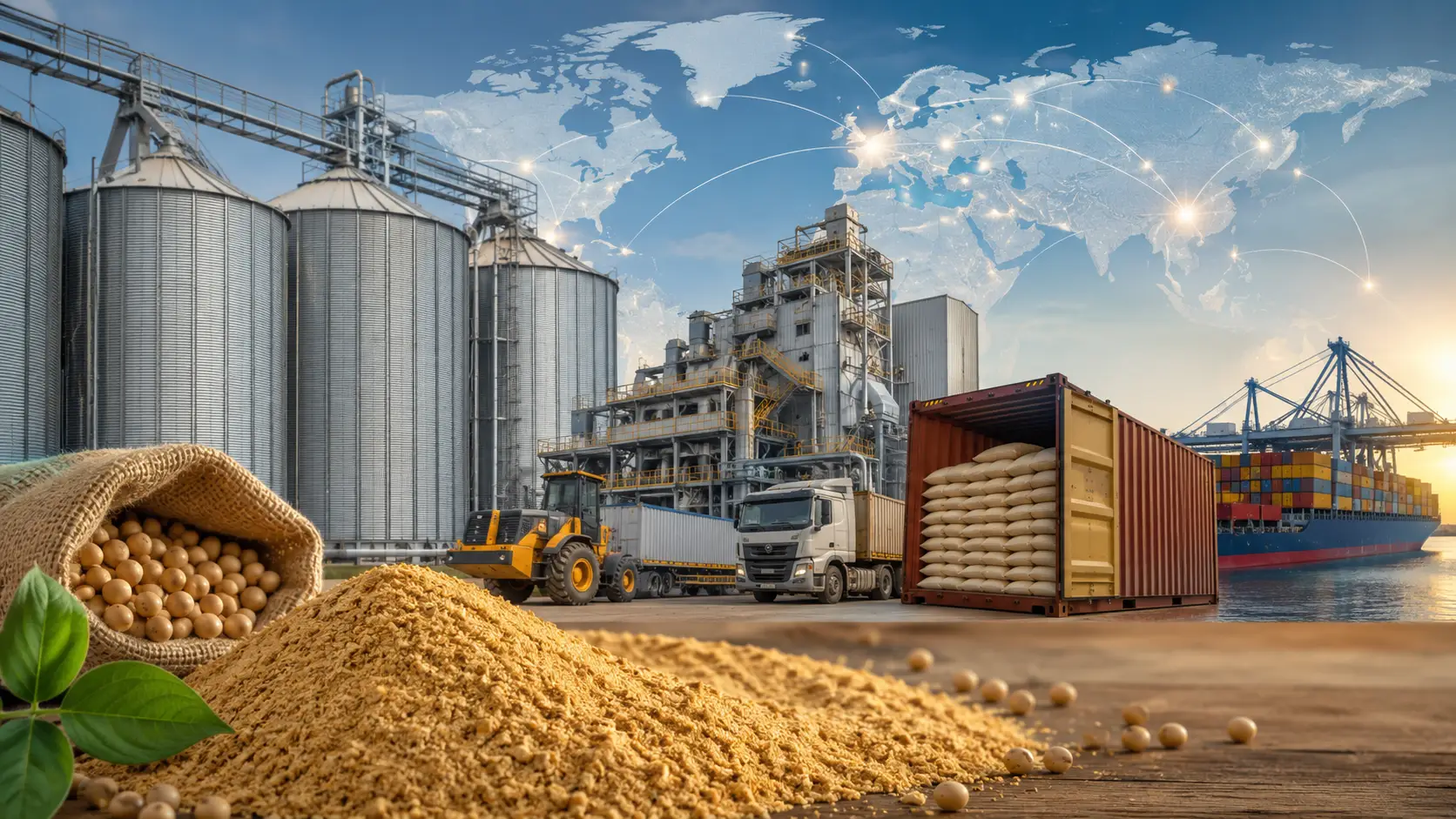
What is Soybean Meal?
Industrial Applications of Soybean Meal
Global Market Trends and Demand Drivers
Key Buyers and Procurement Considerations
Global Sourcing and Supply Chain Opportunities
Future Outlook of the Soybean Meal Industry
Conclusion
Sources
Soybean meal is one of the world's most widely traded plant protein ingredients and is produced as a by-product during soybean oil extraction. The material contains high levels of digestible protein, making it a critical ingredient in commercial animal feed formulations.
The protein concentration of soybean meal typically ranges from 44% to 48%, depending on the processing method and dehulling practices. According to the Food and Agriculture Organization, soybean meal represents one of the most efficient protein sources for livestock and poultry production due to its favorable amino acid profile.
Its high lysine content and relatively consistent nutritional composition have made soybean meal a benchmark protein ingredient in feed manufacturing. The product is available in different grades to meet varying nutritional requirements across animal species.
As global demand for animal protein increases, soybean meal continues to play a strategic role in supporting feed security and agricultural productivity.
The majority of global soybean meal production is consumed by the feed industry, where it serves as an essential source of protein and energy for livestock.
According to the United States Department of Agriculture, soybean meal accounts for a significant share of protein ingredients used in poultry, swine, cattle, and aquaculture feed formulations.
Feed manufacturers use soybean meal to improve growth performance, feed conversion efficiency, and overall animal health. The ingredient's balanced amino acid profile makes it highly suitable for intensive animal production systems.
The aquaculture industry has also increased soybean meal usage as fish farming expands globally and seeks sustainable alternatives to marine-based proteins.
Growing demand for poultry meat and farmed seafood continues to strengthen the commercial importance of soybean meal across multiple agricultural sectors.
Soybean meal demand is strongly linked to rising global meat consumption, population growth, and increasing protein intake in developing economies.
Market analysis published by the Organisation for Economic Co-operation and Development and the FAO indicates that global meat and dairy production will continue to expand over the coming decade, creating sustained demand for feed ingredients.
The poultry sector remains the largest consumer of soybean meal because poultry production requires highly digestible protein sources that support rapid growth.
Another important trend is the rapid development of aquaculture industries in Asia and Latin America, where feed manufacturers increasingly depend on soybean meal for cost-effective protein formulations.
Volatility in soybean production, weather conditions, and international trade policies continues to influence global soybean meal pricing and sourcing strategies.
Soybean meal procurement involves evaluating multiple commercial and technical factors beyond simple price comparisons.
The primary buyers include feed manufacturers, livestock integrators, aquaculture producers, feed premix companies, agricultural traders, and commodity distributors.
According to industry guidance from the American Feed Industry Association, buyers increasingly focus on protein consistency, product specifications, sustainability credentials, and reliable logistics performance.
Procurement teams also assess moisture content, crude protein levels, storage conditions, supply continuity, and compliance with feed safety regulations before making purchasing decisions.
B2B product pages and marketplace platforms help buyers compare specifications, request quotations, and identify suppliers that can provide long-term sourcing partnerships.
The soybean meal supply chain is highly international, with major exporting countries serving feed manufacturers across Asia, Europe, and the Middle East.
According to data from the USDA and international commodity exchanges, major soybean meal suppliers are supported by large soybean processing industries in countries such as Brazil, Argentina, and the United States.
Import-dependent countries often seek diversified supplier networks to reduce procurement risks associated with geopolitical disruptions and crop variability.
Digital B2B marketplaces have become increasingly important by enabling buyers to identify new suppliers, compare specifications, and secure competitive quotations more efficiently.
For distributors and procurement teams, strategic sourcing partnerships can improve supply security while reducing exposure to market volatility.
The long-term outlook for soybean meal remains positive due to continued growth in global animal protein production and feed demand.
Industry forecasts from the OECD and FAO suggest that poultry and aquaculture production will continue expanding, particularly in emerging markets.
Sustainability considerations are also influencing purchasing decisions, with buyers increasingly seeking responsibly sourced feed ingredients and supply chain transparency.
Technological improvements in soybean processing and feed formulation are expected to enhance the efficiency and value proposition of soybean meal products.
As global agriculture continues to industrialize, soybean meal is expected to remain one of the most important protein ingredients in the international feed market.
Soybean meal has established itself as a critical ingredient in the global feed industry due to its nutritional value, consistent performance, and wide availability. The product supports the growth of poultry, livestock, and aquaculture industries while creating significant opportunities for manufacturers, distributors, and procurement teams.
As demand for animal protein continues to rise, reliable sourcing strategies and diversified supplier networks will become increasingly important. B2B marketplaces and digital procurement platforms can help buyers identify suitable suppliers and make informed purchasing decisions in an increasingly competitive global market.
We're committed to your privacy. Tradeasia uses the information you provide to us to contact you about our relevant content, products, and services. For more information, check out our privacy policy.


 English
 Indonesian
 简体字
简体字
 العربية
 Español
 Français
 Português
 日本語
日本語
 한국어
한국어
 Tiếng Việt



















