Explore our network of country and industry based websites to access localized information, product offerings, and business services across our group.
Log in to start sending quotation requests for any product.
Don't have an account? Sign Up Here
Home Sunflower Meal Sourcing Guide: Market Insights for Feed Industry Buyers
Trade Insights | Applications and Buyers | 18 June 2026

Understanding Sunflower Meal in the Global Feed Industry
Industrial Applications of Sunflower Meal
Market Trends Driving Sunflower Meal Demand
Key Buyer Groups and Procurement Requirements
Sourcing Considerations for B2B Buyers
Global Trade and Supply Chain Outlook
Buyer Intent and Supplier Evaluation Factors
Conclusion
Sources
Sunflower meal is a protein-rich by-product generated during the extraction of oil from sunflower seeds. It has become an important feed ingredient due to its nutritional profile and widespread availability in major agricultural producing regions.
According to the Food and Agriculture Organization (FAO), oilseed processing industries continue to play a significant role in supplying protein meals for livestock production worldwide. Sunflower meal is among the major vegetable protein meals used in commercial feed formulations.
Feed manufacturers utilize sunflower meal as a complementary protein source alongside soybean meal and other plant-based ingredients. Its fiber content and amino acid profile make it suitable for various feed formulations depending on livestock species and nutritional requirements.
Technical information from agricultural research institutions indicates that sunflower meal can contribute valuable protein and energy content in balanced feed programs while supporting ingredient diversification strategies.
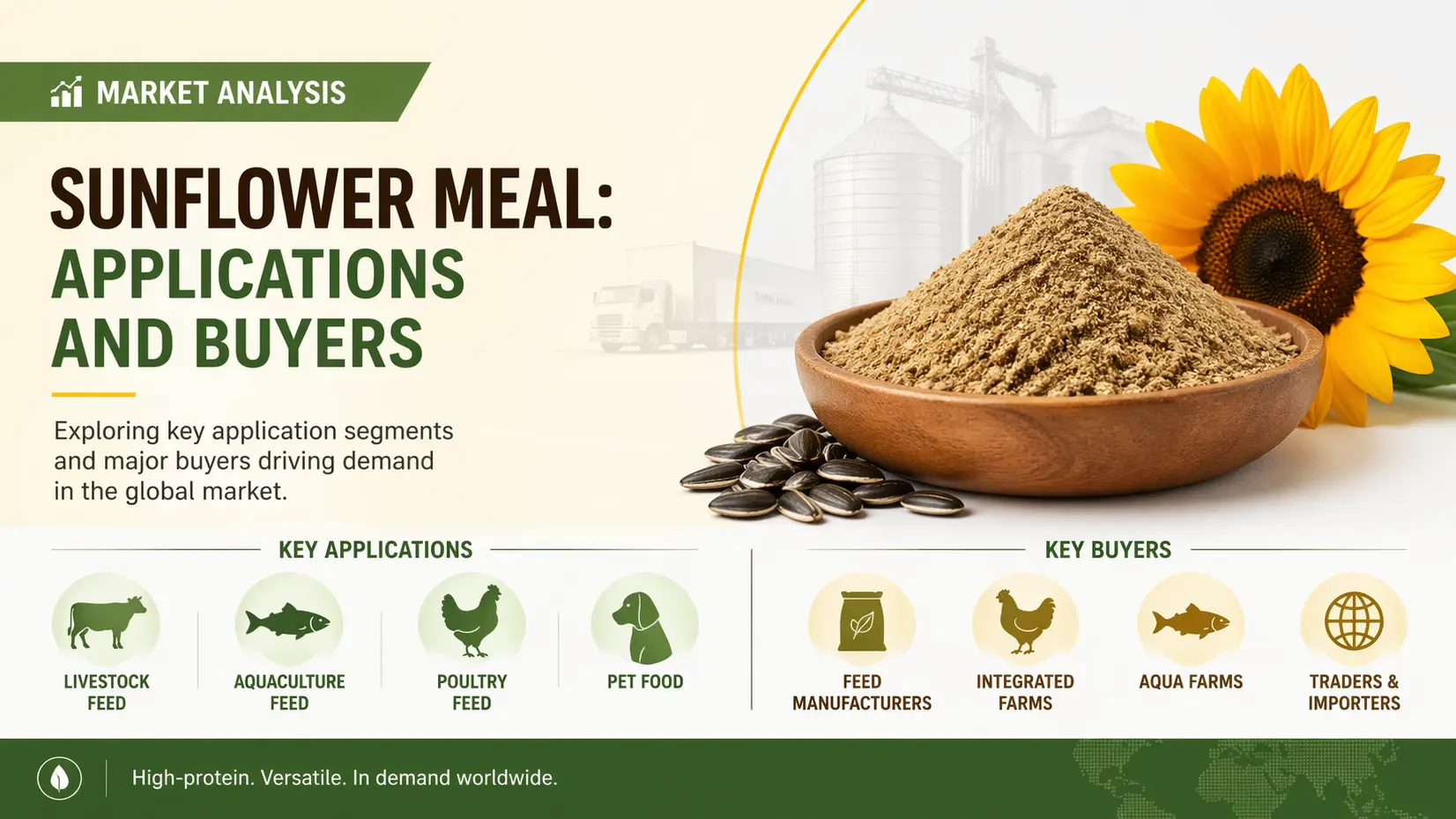
The primary application of sunflower meal is in the animal nutrition sector, where it serves as a feed ingredient for livestock, poultry, and aquaculture production systems. Its use supports growing demand for protein-based feed materials.
Industry reports from major feed associations show that increasing global meat and dairy production continues to drive demand for alternative protein ingredients that can complement conventional feed materials.
Sunflower meal is commonly incorporated into cattle, sheep, goat, poultry, and swine diets. Feed formulators often adjust inclusion rates based on protein requirements, digestibility targets, and overall feed economics.
Research published by agricultural universities and feed science organizations highlights sunflower meal's value as a cost-effective protein ingredient capable of supporting healthy animal growth and production performance.
The aquaculture sector has also explored sunflower meal as a plant-based protein source in fish feed formulations. Growing sustainability initiatives are encouraging the adoption of alternative protein ingredients within aquatic nutrition programs.
According to studies published in aquaculture nutrition journals, sunflower meal can help diversify protein sourcing strategies while reducing dependence on traditional feed components.
Global demand for animal protein continues to influence feed ingredient consumption. As livestock and aquaculture industries expand, demand for vegetable protein meals such as sunflower meal has increased across multiple regions.
Market analysis published by organizations monitoring agricultural commodities indicates that feed producers are actively seeking reliable and competitively priced protein sources to manage formulation costs.
Sustainability has become a major purchasing consideration throughout the feed supply chain. Buyers increasingly evaluate ingredients based on environmental impact, resource efficiency, and supply chain transparency.
According to reports from international agricultural organizations, plant-derived feed ingredients are benefiting from growing interest in sustainable livestock production practices and responsible sourcing initiatives.
Supply fluctuations and pricing volatility in global protein meal markets have encouraged feed manufacturers to diversify ingredient portfolios. Sunflower meal has emerged as an attractive option in regions with strong sunflower processing industries.
Industry experts note that ingredient diversification can improve procurement flexibility while helping manufacturers reduce supply chain risks associated with reliance on a single protein source.
Sunflower meal is purchased by a diverse range of commercial organizations operating within agricultural and feed value chains. These buyers often prioritize consistent quality, nutritional value, and reliable supply availability.
According to feed industry procurement practices, purchasing teams typically evaluate suppliers based on product specifications, production capabilities, and logistical performance.
Commercial feed mills represent one of the largest buyer groups for sunflower meal. These companies require stable volumes and standardized quality parameters to maintain efficient feed production operations.
Procurement departments frequently assess protein content, fiber levels, moisture specifications, and batch consistency before finalizing supplier agreements.
Agricultural commodity traders and feed ingredient distributors also source sunflower meal to serve regional customers. Their purchasing strategies often focus on market competitiveness, supply continuity, and trade opportunities.
Industry trade data suggests that distributors increasingly seek suppliers capable of supporting international shipments and long-term commercial partnerships.
Successful procurement of sunflower meal requires a comprehensive assessment of product quality, supplier reliability, and market conditions. Buyers must evaluate both technical specifications and commercial factors.
According to international feed ingredient quality standards, consistency and traceability are critical considerations when sourcing protein meals for commercial feed applications.
Buyers commonly review nutritional composition, protein concentration, fiber content, moisture levels, and contaminant controls before purchasing sunflower meal. Product documentation and quality assurance programs often play a central role in supplier selection.
Technical audits and laboratory testing may be used to verify compliance with customer requirements and regulatory expectations.
Reliable logistics support is essential for maintaining uninterrupted feed manufacturing operations. Procurement teams frequently assess supplier inventory capacity, export capabilities, and transportation networks.
Industry sourcing specialists recommend evaluating long-term supply security and regional production conditions when developing procurement strategies.
The sunflower meal market is closely connected to global sunflower seed production and vegetable oil processing activity. Major producing countries contribute significantly to international trade flows and export availability.
According to agricultural market data from government agencies and commodity monitoring organizations, production trends in Eastern Europe, the Black Sea region, and other major growing areas influence global supply dynamics.
Countries with large sunflower cultivation industries often serve as key suppliers to international feed markets. Processing infrastructure and export logistics determine the competitiveness of these supply regions.
Market observers continue to monitor crop yields, weather conditions, and trade policies that may affect sunflower meal availability.
Growing feed demand across developing economies is expected to create additional opportunities for sunflower meal suppliers and exporters. Investment in agricultural processing infrastructure may further strengthen supply capabilities.
Industry forecasts indicate continued interest in vegetable protein meals as livestock and aquaculture production expand globally.
Commercial buyers typically seek sunflower meal to support feed production efficiency, nutritional performance, and procurement cost management. Purchasing decisions are often driven by operational and strategic objectives.
According to procurement best practices within the feed industry, buyers compare multiple suppliers to identify optimal combinations of quality, pricing, reliability, and logistics support.
Procurement professionals commonly review product specifications, supplier certifications, manufacturing capabilities, shipment flexibility, and historical performance before making purchasing decisions.
They may also assess technical support, documentation availability, and responsiveness to customer requirements throughout the sourcing process.
B2B chemical and feed ingredient marketplaces provide centralized access to suppliers, product information, and sourcing opportunities. These platforms help buyers compare offerings and streamline procurement workflows.
For manufacturers, distributors, traders, and sourcing teams, detailed product listings and supplier information support more informed purchasing decisions and improved supply chain visibility.
Sunflower meal remains an important protein ingredient within the global feed industry, serving livestock, poultry, and aquaculture applications. Its nutritional value, availability, and versatility continue to support demand across international markets.
As feed manufacturers seek diversified protein sources and more resilient supply chains, sunflower meal is expected to remain a strategic procurement option. Companies that evaluate quality specifications, supplier reliability, and market conditions can strengthen sourcing outcomes and improve long-term purchasing performance.
Food and Agriculture Organization (FAO)
United States Department of Agriculture (USDA) Economic Research Service
We're committed to your privacy. Tradeasia uses the information you provide to us to contact you about our relevant content, products, and services. For more information, check out our privacy policy.


 English
 Indonesian
 简体字
简体字
 العربية
 Español
 Français
 Português
 日本語
日本語
 한국어
한국어
 Tiếng Việt