Explore our network of country and industry based websites to access localized information, product offerings, and business services across our group.
Log in to start sending quotation requests for any product.
Don't have an account? Sign Up Here
Home Sodium Sulphate Anhydrous Feed Grade Sourcing Guide for Global B2B Buyers
Trade Insights | Supply Chain | 04 June 2026

Understanding Sodium Sulphate Anhydrous Feed Grade
Role in Animal Nutrition and Feed Manufacturing
Market Trends Driving Global Demand
Buyer Intent and Procurement Considerations
Supplier Evaluation and Quality Requirements
Global Sourcing Opportunities Through B2B Marketplaces
Conclusion: Building a Reliable Supply Strategy
Sources
Sodium sulphate anhydrous feed grade is an inorganic salt used within animal nutrition formulations and feed manufacturing processes. It serves as a source of sodium and sulphur, both of which are important elements in livestock nutrition programs designed to support healthy growth and metabolic functions.
The product is manufactured to meet feed industry specifications that distinguish it from industrial-grade sodium sulphate used in detergents, glass manufacturing, and chemical processing. Feed-grade quality focuses on purity, contaminant control, and compliance with animal nutrition regulations.
Technical information published by the Food and Agriculture Organization (FAO) highlights the importance of balanced mineral supplementation in animal feed formulations. Sodium and sulphur contribute to physiological functions that support livestock productivity and feed efficiency.
As feed producers continue to optimize formulations for poultry, cattle, swine, and other livestock sectors, sodium sulphate anhydrous feed grade remains a specialized ingredient that supports mineral balancing strategies while offering formulation flexibility for feed manufacturers.
Animal feed manufacturers use sodium sulphate anhydrous feed grade as part of mineral supplementation programs. Depending on species requirements and formulation objectives, the ingredient may be incorporated into compound feeds, premixes, and nutritional concentrates.
The growing focus on feed efficiency has increased attention on trace minerals and macro-minerals that support animal performance. Feed formulators seek ingredients that provide consistent composition and reliable handling characteristics during production.
According to guidance from the National Research Council (NRC) on animal nutrient requirements, mineral balance plays a critical role in supporting livestock growth, reproduction, and overall health. Feed-grade sodium sulphate can contribute to these nutritional objectives when used within approved formulation parameters.
Poultry, ruminant, and swine feed manufacturers evaluate mineral sources based on bioavailability, consistency, and economic value. This evaluation process has helped sustain demand for specialized feed additives that support commercial livestock operations worldwide.
Global demand for feed additives continues to grow alongside rising meat, dairy, and poultry consumption. Expanding livestock production in Asia-Pacific, Latin America, and parts of Africa has increased the need for reliable feed ingredient supply chains.
The modernization of commercial farming operations has encouraged greater use of scientifically formulated feeds. As producers pursue improved productivity and feed conversion efficiency, mineral supplementation remains an important component of feed formulation strategies.
Market analysis published by the Organisation for Economic Co-operation and Development (OECD) and FAO indicates continued growth in global agricultural and livestock production over the coming years. This trend supports long-term demand for feed ingredients and specialty nutritional additives.
In addition, increasing regulatory scrutiny regarding feed quality and traceability is encouraging buyers to source materials from suppliers capable of providing documentation, testing data, and regulatory compliance support. These requirements are reshaping purchasing decisions throughout the feed supply chain.
Procurement teams purchasing sodium sulphate anhydrous feed grade typically represent feed manufacturers, premix producers, livestock nutrition companies, agricultural distributors, and animal health supply organizations. These buyers often manage large-volume purchasing programs requiring dependable supply continuity.
Commercial buyers assess multiple suppliers before making purchasing decisions. The objective is not only to secure competitive pricing but also to reduce operational risk associated with quality deviations, shipment delays, or regulatory non-compliance.
According to feed industry guidance from the International Feed Industry Federation (IFIF), quality assurance, product consistency, traceability, and supplier reliability are major procurement priorities. Buyers frequently request certificates of analysis, product specifications, and manufacturing information before approving suppliers.
A well-structured product page supports sourcing decisions by providing technical specifications, application information, packaging options, logistics capabilities, and documentation availability. These details help procurement teams compare suppliers efficiently and shorten purchasing cycles.
Supplier qualification has become increasingly important as feed manufacturers strengthen supply chain management practices. Organizations seek suppliers that can consistently deliver products meeting technical and regulatory requirements across multiple shipments.
Quality assurance programs often include raw material testing, batch traceability, contaminant monitoring, and documentation management. These systems help suppliers demonstrate compliance with customer requirements and industry standards.
Guidelines published by regulatory authorities such as the European Food Safety Authority (EFSA) emphasize the importance of feed safety and ingredient quality within animal nutrition supply chains. Compliance with regional regulations remains a critical factor in supplier approval processes.
Beyond regulatory compliance, buyers frequently evaluate supplier experience, production capacity, export capabilities, packaging quality, and customer service responsiveness. These criteria contribute to long-term supplier partnerships and stable procurement performance.
Digital B2B marketplaces have transformed how chemical and feed ingredient buyers identify suppliers. Procurement professionals can now access supplier information, product specifications, and sourcing opportunities across multiple regions through centralized platforms.
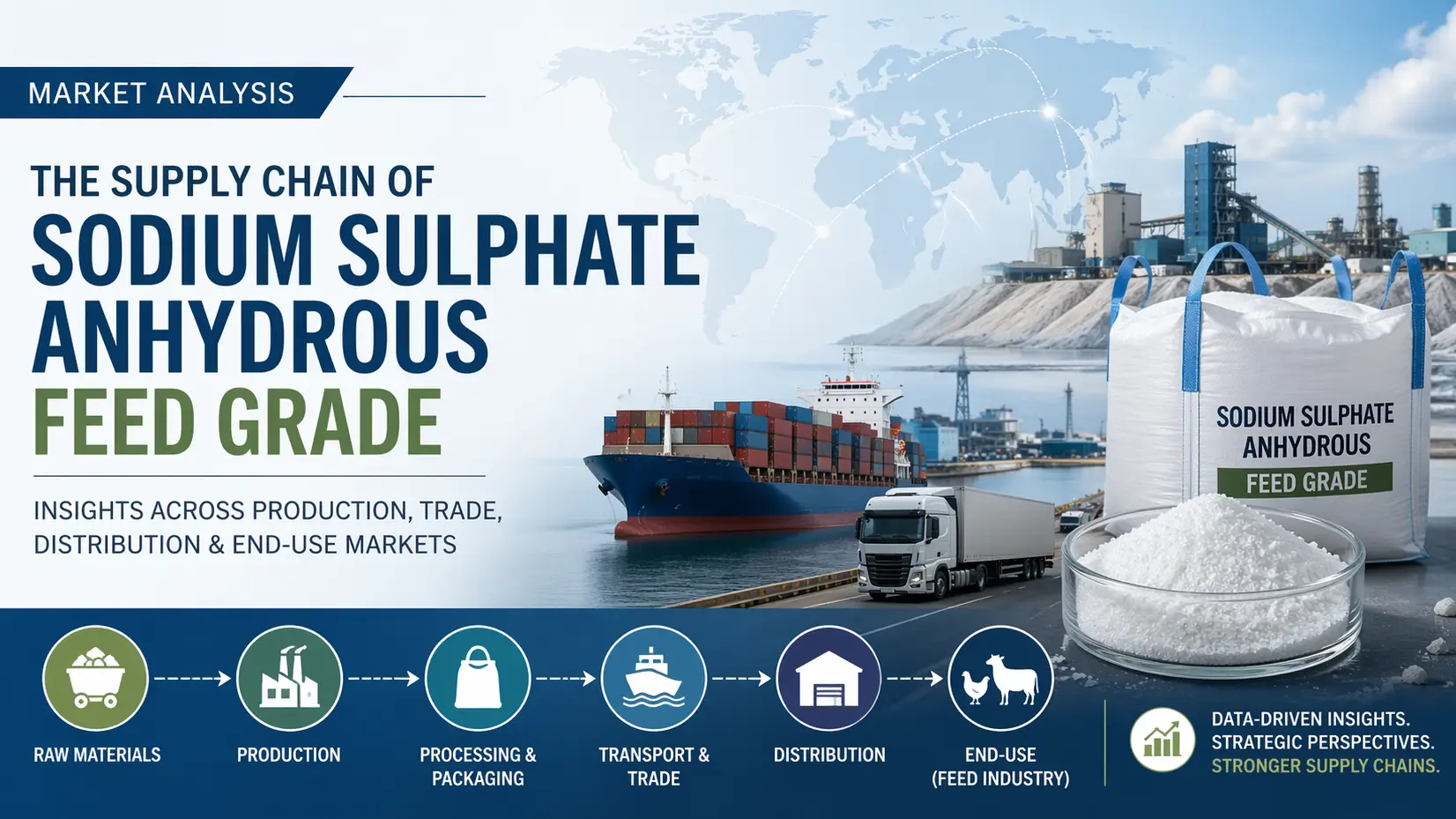
For sodium sulphate anhydrous feed grade, global sourcing strategies provide access to diverse manufacturing bases and trading networks. Buyers can evaluate suppliers from different countries while comparing quality standards, logistics options, and commercial terms.
Research published by the World Trade Organization (WTO) indicates that digital trade platforms are increasingly facilitating international business transactions and improving supply chain connectivity. This trend has accelerated sourcing efficiency for industrial and agricultural products.
Platforms such as Tradeasia, Chemtradeasia, and Tradechem Marketplace help connect manufacturers, distributors, traders, and procurement teams. By consolidating supplier information and product availability, these marketplaces support informed sourcing decisions and broader market access for global buyers.
Sodium sulphate anhydrous feed grade continues to play an important role within modern animal nutrition and feed manufacturing industries. Its application as a mineral source supports feed formulation objectives across multiple livestock sectors.
As global demand for feed ingredients grows, procurement teams increasingly prioritize quality, traceability, and supplier reliability. These factors influence purchasing decisions and long-term sourcing strategies.
Industry forecasts from FAO and OECD suggest ongoing expansion in livestock production and feed demand. This outlook supports sustained opportunities for suppliers, distributors, and traders participating in the feed additive market.
Organizations that combine robust supplier evaluation processes with access to reliable sourcing channels are better positioned to manage supply risks, maintain product quality, and support business growth in an increasingly competitive global marketplace.
We're committed to your privacy. Tradeasia uses the information you provide to us to contact you about our relevant content, products, and services. For more information, check out our privacy policy.


 English
 Indonesian
 简体字
简体字
 العربية
 Español
 Français
 Português
 日本語
日本語
 한국어
한국어
 Tiếng Việt