Explore our network of country and industry based websites to access localized information, product offerings, and business services across our group.
Log in to start sending quotation requests for any product.
Don't have an account? Sign Up Here
Home Soybean Meal Global Sourcing Guide: Supply Chain Insights for B2B Buyers
Trade Insights | Supply Chain | 17 June 2026
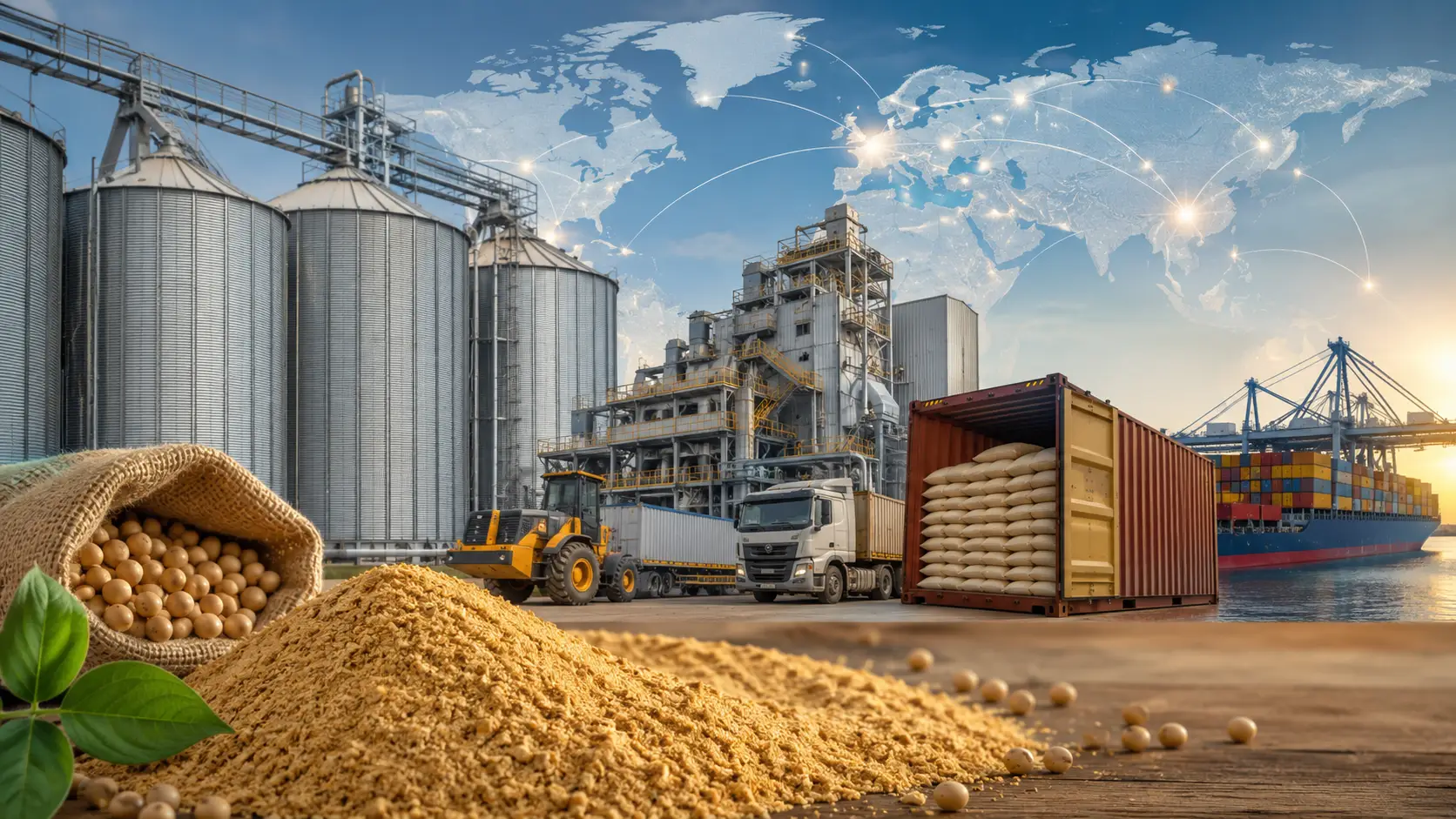
Understanding Soybean Meal and Its Commercial Importance
Major Industrial Applications of Soybean Meal
Global Soybean Meal Market and Supply Chain Trends
Key Buyer Groups and Procurement Requirements
How to Source Soybean Meal in the Global Market
Future Opportunities and Market Outlook
Conclusion
Sources
Soybean meal is a protein-rich ingredient produced as a by-product during soybean oil extraction. It is widely recognized as one of the most valuable protein sources in global animal nutrition due to its favorable amino acid profile and high digestibility.
The product generally contains between 44% and 48% crude protein, making it a preferred ingredient in commercial feed formulations. According to the Food and Agriculture Organization (FAO), soybean meal remains one of the most traded agricultural protein ingredients worldwide because of its nutritional consistency and broad availability.
The increasing demand for animal protein products has strengthened the importance of soybean meal in agricultural supply chains. Feed producers rely on stable soybean meal supplies to maintain efficient livestock production and improve feed conversion rates.
As global meat consumption continues to rise, soybean meal has become a strategic commodity connecting soybean cultivation, oilseed processing, and livestock industries across international markets.
Soybean meal is primarily utilized in feed manufacturing due to its excellent nutritional composition and economic efficiency. It serves as an essential ingredient for numerous animal species and production systems.
Poultry feed manufacturers use soybean meal extensively because of its high protein digestibility and balanced amino acid content. Swine producers also depend on soybean meal to support growth performance and improve feed efficiency.
According to the United States Department of Agriculture (USDA), soybean meal accounts for a significant share of protein feed ingredients used in global livestock production, particularly in poultry and pig farming.
The aquaculture industry has increasingly adopted soybean meal as a partial replacement for fishmeal in fish and shrimp diets. This shift reflects growing efforts to improve sustainability and reduce dependence on marine-based feed ingredients.
The dairy and beef industries also use soybean meal to enhance protein intake and support productivity, creating additional demand across agricultural sectors.
The soybean meal market is strongly influenced by soybean production, crushing capacity, international trade policies, and animal protein consumption patterns. Major producing regions include North and South America, where large soybean harvests support extensive processing industries.
Brazil, the United States, and Argentina remain the leading exporters of soybeans and soybean meal. According to the International Grains Council (IGC), these countries play a critical role in maintaining global feed ingredient availability.
Supply chain disruptions, climate variability, and logistics costs have encouraged buyers to diversify procurement strategies and seek multiple sourcing origins. Feed manufacturers increasingly prioritize supplier reliability and inventory security.
The growing adoption of sustainable agriculture practices has also influenced purchasing decisions. Buyers are paying greater attention to traceability, deforestation concerns, and responsible sourcing certifications.
Rising global demand for poultry, pork, and aquaculture products continues to support long-term growth prospects for soybean meal consumption and international trade.
Soybean meal is purchased by a diverse group of commercial buyers that require stable supply and consistent quality standards. Procurement decisions often involve both technical and economic evaluations.
Animal feed manufacturers represent the largest buyer segment because soybean meal is an essential protein component in feed formulations. Integrators in poultry, swine, dairy, and aquaculture sectors also procure soybean meal in significant quantities.
According to market studies published by the Organisation for Economic Co-operation and Development (OECD), feed demand remains one of the primary drivers of global soybean meal consumption.
Procurement teams commonly evaluate protein content, moisture levels, origin, shipment reliability, pricing mechanisms, and supplier certifications before placing orders. They also assess long-term supply agreements to minimize procurement risks.
Buyers compare suppliers because feed production depends on uninterrupted ingredient availability and cost competitiveness. Product information pages that provide technical specifications, application guidance, and sourcing details support informed purchasing decisions.
Sourcing soybean meal requires an understanding of market cycles, supplier capabilities, and logistics considerations. International buyers increasingly seek suppliers that can provide both competitive pricing and dependable delivery performance.
Procurement teams frequently source soybean meal through manufacturers, exporters, commodity traders, and specialized B2B marketplaces. These channels provide access to multiple origins and facilitate supplier comparison.
According to the International Trade Centre (ITC), digital B2B platforms have become increasingly important in connecting buyers with agricultural ingredient suppliers worldwide.
Long-term contracts are commonly used to reduce exposure to market volatility and secure stable supply volumes. Buyers also evaluate shipping infrastructure and warehousing capabilities when selecting suppliers.
Working with experienced sourcing partners can improve procurement efficiency by providing market intelligence, regulatory guidance, and access to diversified supply networks.
The long-term outlook for soybean meal remains positive due to increasing global demand for animal protein and continued growth in commercial livestock production. Emerging economies are expected to contribute significantly to future consumption.
Industry forecasts suggest that poultry and aquaculture sectors will continue driving soybean meal demand over the coming decade. Increasing urbanization and changing dietary preferences are supporting higher consumption of meat and seafood products.
According to projections from the OECD and FAO Agricultural Outlook, global feed demand will continue expanding, creating sustained opportunities for soybean meal suppliers and traders.
The industry is also experiencing growing interest in sustainable sourcing, supply chain transparency, and certified agricultural products. These factors are expected to influence procurement strategies and supplier selection.
As global feed markets evolve, soybean meal will remain a strategically important ingredient, offering substantial commercial opportunities for manufacturers, distributors, and international procurement teams.
Soybean meal has established itself as one of the world's most important protein feed ingredients due to its nutritional value, wide application range, and strong global demand. The product plays a vital role in supporting livestock and aquaculture industries while creating significant opportunities for international trade.
For B2B buyers, successful sourcing depends on understanding market trends, evaluating supplier reliability, and developing resilient procurement strategies. As demand for animal protein continues to rise, soybean meal is expected to remain a critical commodity in global agricultural supply chains.
We're committed to your privacy. Tradeasia uses the information you provide to us to contact you about our relevant content, products, and services. For more information, check out our privacy policy.


 English
 Indonesian
 简体字
简体字
 العربية
 Español
 Français
 Português
 日本語
日本語
 한국어
한국어
 Tiếng Việt



















