Explore our network of country and industry based websites to access localized information, product offerings, and business services across our group.
Log in to start sending quotation requests for any product.
Don't have an account? Sign Up Here
Home Learning Center Improving Feed Pellet Durability with Consistent Binder Quality
Case Study | Apr 30, 2026
The Challenge
Our Approach
The Result
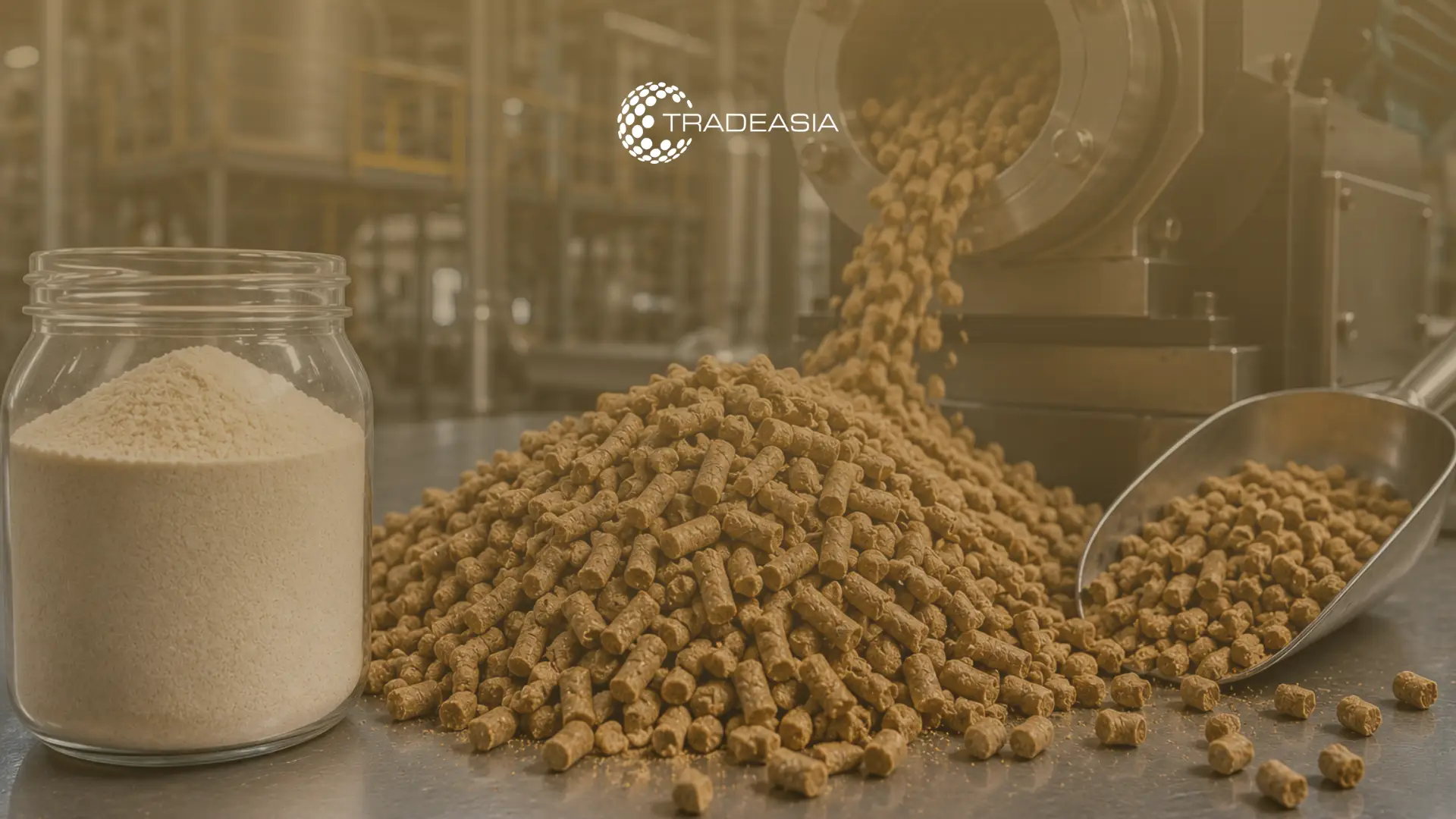
A feed mill producing poultry and livestock feed experienced inconsistent pellet durability during high-volume production. The issue appeared in the form of higher fines generation, uneven pellet hardness, and increased product breakage during bagging and transportation.
Internal review showed that the variation was closely related to inconsistent binder performance and raw material moisture interaction during conditioning and pelleting. Although the formulation was commercially acceptable, the production team struggled to maintain stable pellet quality across different batches.
The manufacturer faced several operational challenges:
Higher fines percentage in finished feed, reducing nutritional value delivered to animals
Inconsistent pellet durability index performance across production shifts
Additional reprocessing cost and unplanned production downtime
Increased customer complaints related to product handling quality and breakage during delivery
The company needed a practical raw material solution that could improve pellet binding performance without significantly increasing formulation cost or disrupting existing production workflows.
A technical review was conducted covering the feed formulation, conditioning temperature, moisture control, and binder application rate. The analysis showed that improving binder consistency was the most direct lever to stabilize pellet structure and reduce fines formation without major process changes.
Key evaluation points included:
Binder performance under varying heat and moisture exposure during steam conditioning
Compatibility with both poultry and livestock feed formulations in the same production line
Effect of binder grade on pellet hardness and durability index results
Cost impact per metric ton of finished feed at different inclusion rates
Based on the production requirement, a more consistent feed binder specification was recommended, supported by stable supply planning and batch-level quality documentation. Each delivery was accompanied by a Certificate of Analysis to allow incoming quality verification before use in production.
This approach allowed the feed mill to align procurement decisions with production performance standards rather than relying only on lowest-cost purchasing, which had previously introduced material variability into the process.
After applying the revised binder specification and implementing incoming quality verification, the feed mill observed more stable pellet quality across several consecutive production cycles.
Key outcomes included:
Measurable reduction in fines generation during handling and transportation
Improved pellet durability index consistency across production shifts
Lower reprocessing requirement, reducing energy and labor cost
Improved customer acceptance of finished feed quality with fewer handling complaints
By improving raw material consistency and aligning binder selection with pelleting requirements, the manufacturer achieved a more predictable production process while maintaining commercial cost efficiency. The improved durability also supported better nutrient delivery in animal feeding programs.
No popular case studies found.
We're committed to your privacy. Tradeasia uses the information you provide to us to contact you about our relevant content, products, and services. For more information, check out our privacy policy.


 English
 Indonesian
 简体字
简体字
 العربية
 Español
 Français
 Português
 日本語
日本語
 한국어
한국어
 Tiếng Việt



















