Explore our network of country and industry based websites to access localized information, product offerings, and business services across our group.
Log in to start sending quotation requests for any product.
Don't have an account? Sign Up Here
Home Meat and Bone Meal: Applications, Buyers, and Market Opportunities
Trade Insights | Applications and Buyers | 18 June 2026

Understanding Meat and Bone Meal in the Global Feed Industry
Industrial Applications Driving Demand for Meat and Bone Meal
Market Trends and Growth Opportunities
Key Buyer Groups and Procurement Considerations
Sourcing Meat and Bone Meal in International Markets
Quality Standards and Regulatory Factors
Buyer Intent and Supplier Evaluation Criteria
Conclusion: Strategic Opportunities for B2B Market Participants
Sources
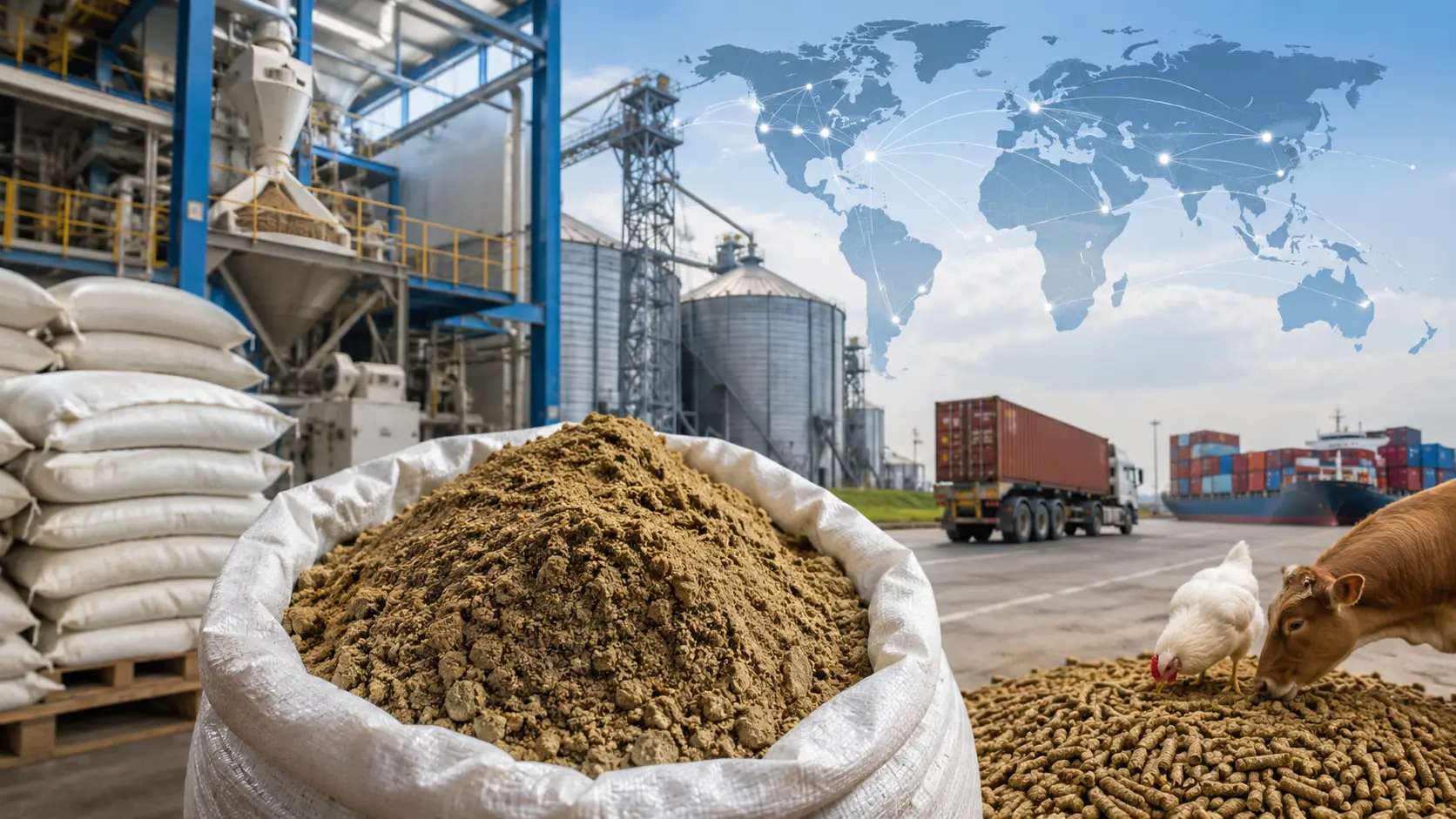
Meat and Bone Meal (MBM) is a protein-rich feed ingredient produced through the rendering of animal by-products. It contains significant levels of protein, minerals, calcium, and phosphorus, making it a valuable component in animal nutrition formulations.
The global feed industry continues to seek cost-effective and nutritionally balanced ingredients capable of supporting livestock productivity and feed efficiency. Meat and Bone Meal remains a widely recognized ingredient in many feed applications due to its nutritional value.
The production process involves rendering animal tissues and bones under controlled conditions to create a stable and nutrient-dense meal suitable for industrial feed use.
According to technical guidance published by the Food and Agriculture Organization (FAO), rendered animal proteins contribute significantly to resource efficiency by transforming by-products into valuable feed ingredients.
The use of Meat and Bone Meal supports circular economy principles by converting animal processing by-products into productive agricultural inputs.
Industry information from the North American Renderers Association highlights the role of rendering in reducing waste while generating valuable protein and mineral products for livestock industries.
The primary commercial application of Meat and Bone Meal is within animal feed manufacturing, where it serves as a concentrated source of protein and essential minerals.
Its nutritional profile supports feed formulations for poultry, swine, aquaculture, and certain pet food applications depending on regional regulations and industry practices.
Feed producers utilize Meat and Bone Meal to enhance protein content while contributing calcium and phosphorus required for animal growth and skeletal development.
Research published through agricultural institutions and animal nutrition studies consistently identifies rendered protein meals as important feed ingredients in balanced livestock diets.
Some pet food manufacturers incorporate Meat and Bone Meal into formulations where permitted by regulatory standards and consumer market requirements.
Market assessments from industry analysts indicate continued demand for animal-derived protein ingredients within selected pet nutrition categories globally.
Global demand for animal protein continues to drive expansion in livestock production systems, creating demand for efficient feed ingredients.
As feed manufacturers seek cost optimization and nutritional consistency, Meat and Bone Meal remains relevant within approved markets and applications.
According to reports from the International Feed Industry Federation, global feed production volumes continue to expand alongside increasing demand for meat, dairy, and aquaculture products.
This trend supports ongoing procurement activity for protein-rich feed ingredients capable of improving formulation economics.
Sustainability objectives are influencing purchasing decisions throughout agricultural supply chains.
Industry reports indicate growing interest in ingredients that maximize resource utilization, making rendered products increasingly important in discussions surrounding sustainable feed production.
Multiple industry segments purchase Meat and Bone Meal as part of their operational supply requirements.
These buyers often evaluate suppliers based on nutritional consistency, quality assurance, regulatory compliance, and long-term supply reliability.
Commercial feed producers represent one of the largest buyer groups for Meat and Bone Meal globally.
Procurement teams focus on protein levels, mineral content, digestibility characteristics, and supplier production capabilities when evaluating sourcing options.
Commodity traders and feed ingredient distributors actively participate in international Meat and Bone Meal supply chains.
These organizations frequently assess logistics efficiency, export documentation, market pricing, and supplier credibility before entering purchasing agreements.
Global sourcing requires careful assessment of supply regions, regulatory frameworks, and supplier capabilities.
International buyers often compare multiple suppliers to ensure competitive pricing and consistent product availability.
Reliable suppliers typically provide detailed product specifications, quality documentation, and transparent production practices.
Procurement professionals frequently request certificates of analysis, microbiological testing results, and production traceability information before approving suppliers.
Export-oriented producers continue to serve demand across Asia, the Middle East, Latin America, and selected European markets.
Market intelligence published by agricultural trade organizations indicates that trade flows remain influenced by feed demand, livestock production growth, and regulatory developments.
Quality management remains a critical consideration throughout the Meat and Bone Meal supply chain.
Manufacturers and buyers alike must ensure compliance with applicable feed safety regulations and industry standards.
Key specifications typically include protein content, moisture levels, ash content, calcium concentration, phosphorus concentration, and microbiological safety indicators.
Technical standards published by feed regulatory agencies help buyers establish acceptable quality benchmarks during procurement.
Different countries maintain varying regulations governing the use of rendered animal proteins in feed applications.
According to regulatory guidance from government agricultural authorities, importers and manufacturers must verify compliance requirements before purchasing or distributing products.
Commercial buyers approach Meat and Bone Meal procurement with specific operational and economic objectives.
Understanding buyer intent helps suppliers and marketplaces better support sourcing decisions.
Procurement teams typically assess nutritional consistency, quality certifications, production capacity, logistics reliability, and supplier responsiveness.
Cost competitiveness remains important, but many buyers prioritize long-term supply security and compliance assurance when selecting partners.
Digital B2B marketplaces simplify supplier discovery by connecting buyers with verified manufacturers, exporters, and distributors.
These platforms help procurement professionals compare specifications, evaluate supplier capabilities, and identify sourcing opportunities across multiple regions.
Meat and Bone Meal continues to play an important role in global animal nutrition supply chains due to its protein content, mineral contribution, and resource efficiency benefits.
Growing feed production, sustainability initiatives, and increasing demand for cost-effective nutritional ingredients support ongoing market opportunities.
For feed manufacturers, traders, distributors, and procurement professionals, successful sourcing depends on evaluating supplier quality, regulatory compliance, and supply reliability. Companies that leverage trusted B2B marketplaces and maintain rigorous supplier assessment processes can improve procurement outcomes while supporting long-term business growth.
We're committed to your privacy. Tradeasia uses the information you provide to us to contact you about our relevant content, products, and services. For more information, check out our privacy policy.


 English
 Indonesian
 简体字
简体字
 العربية
 Español
 Français
 Português
 日本語
日本語
 한국어
한국어
 Tiếng Việt