Explore our network of country and industry based websites to access localized information, product offerings, and business services across our group.
Log in to start sending quotation requests for any product.
Don't have an account? Sign Up Here
Home Soy Protein Isolate Global Sourcing Guide for Industrial Buyers and Suppliers
Trade Insights | Applications and Buyers | 17 June 2026
What Is Soy Protein Isolate?
Industrial Applications of Soy Protein Isolate
Global Market Trends and Demand Drivers
Key Buyer Groups and Procurement Considerations
Sourcing Opportunities and Supply Chain Insights
Future Outlook for Soy Protein Isolate
Conclusion
Sources
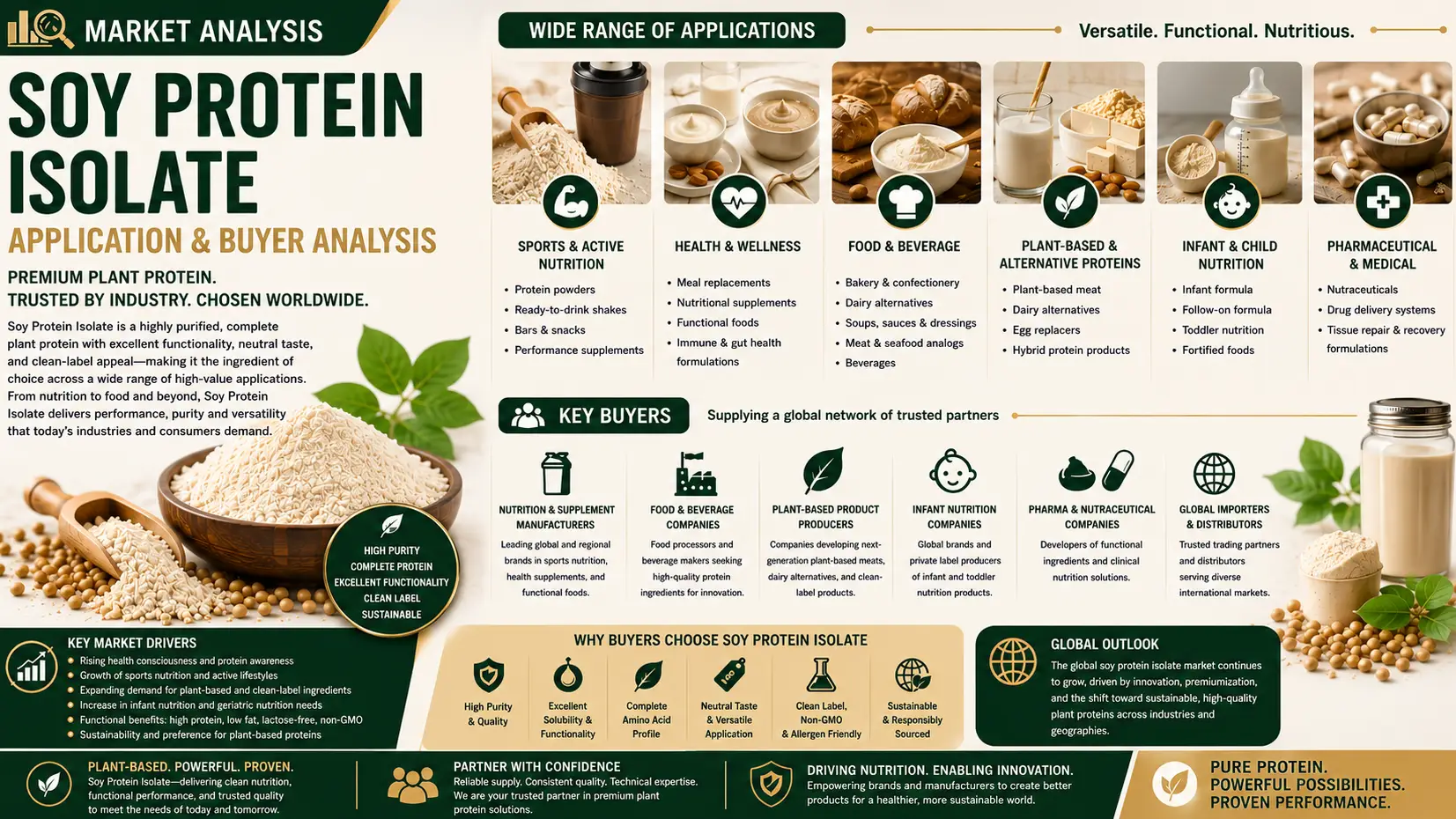
Soy protein isolate is a highly refined protein ingredient produced from defatted soybean meal. The ingredient typically contains more than 90% protein on a dry basis, making it one of the most concentrated plant protein ingredients available for industrial applications. Its nutritional profile and functional properties have made it increasingly important in modern food manufacturing.
Soy protein isolate offers excellent emulsification, water-binding, and gel-forming capabilities. According to technical information published by the United States Department of Agriculture (USDA), soy proteins provide a complete amino acid profile that supports their use in both conventional and alternative protein products. These properties enable manufacturers to improve texture, nutritional value, and processing efficiency.
The ingredient is commonly available in powdered form and can be customized for specific industrial formulations. Food producers often choose soy protein isolate because it contributes protein enrichment without significantly affecting flavor when properly processed.
As consumer demand for protein-enriched foods continues to increase, soy protein isolate has become a strategic ingredient for manufacturers seeking functional and cost-effective protein solutions.
Soy protein isolate serves a broad range of applications in food processing and nutrition industries. Its versatility allows manufacturers to incorporate it into products requiring protein fortification, texture enhancement, and functional stability.
According to research published in the journal Foods, plant proteins are increasingly used in meat alternatives, dairy alternatives, sports nutrition products, and functional foods due to changing dietary preferences and sustainability concerns. Soy protein isolate remains one of the most widely adopted ingredients because of its functionality and economic advantages.
The ingredient is frequently used in plant-based meat products to improve texture and water retention. It is also incorporated into protein beverages, nutrition bars, bakery products, infant nutrition, and dietary supplements.
Animal nutrition manufacturers also utilize soy protein isolate in specialized feed applications where high protein digestibility is required.
The expanding use of plant-based proteins across multiple industries continues to support long-term demand for soy protein isolate globally.
The global market for soy protein isolate has experienced significant growth as food manufacturers respond to changing consumer preferences. Demand for plant-based proteins and healthier food alternatives has created new opportunities across developed and emerging markets.
Market analysis published by industry research firms such as Grand View Research indicates that plant-based protein consumption is increasing due to rising health awareness, environmental concerns, and dietary diversification. Soy protein isolate benefits directly from these trends because it offers an established supply chain and proven functionality.
Manufacturers of meat substitutes and dairy alternatives have become major consumers of soy protein isolate as they seek scalable ingredients that meet nutritional and cost requirements.
Asia-Pacific remains a significant production and consumption region due to its large soybean processing industry, while North America and Europe continue to drive innovation in plant-based food products.
The increasing acceptance of alternative proteins is expected to create sustained growth opportunities for suppliers and distributors of soy protein isolate.
Industrial buyers of soy protein isolate range from multinational food companies to regional ingredient distributors. Procurement teams evaluate several criteria before selecting suppliers because product quality directly affects manufacturing performance.
According to guidance from the Food and Agriculture Organization (FAO), protein ingredients used in food applications require consistent quality, traceability, and compliance with regulatory standards. Buyers often prioritize suppliers that can provide reliable documentation and stable supply capabilities.
Food manufacturers typically purchase soy protein isolate for meat alternatives, nutritional products, bakery formulations, and beverage applications. Nutraceutical companies seek high-protein ingredients that support product claims and functional performance.
Procurement teams compare suppliers based on specifications, protein content, certifications, pricing stability, and logistics capabilities.
A comprehensive product page that provides technical information and sourcing support can significantly streamline purchasing decisions for industrial buyers.
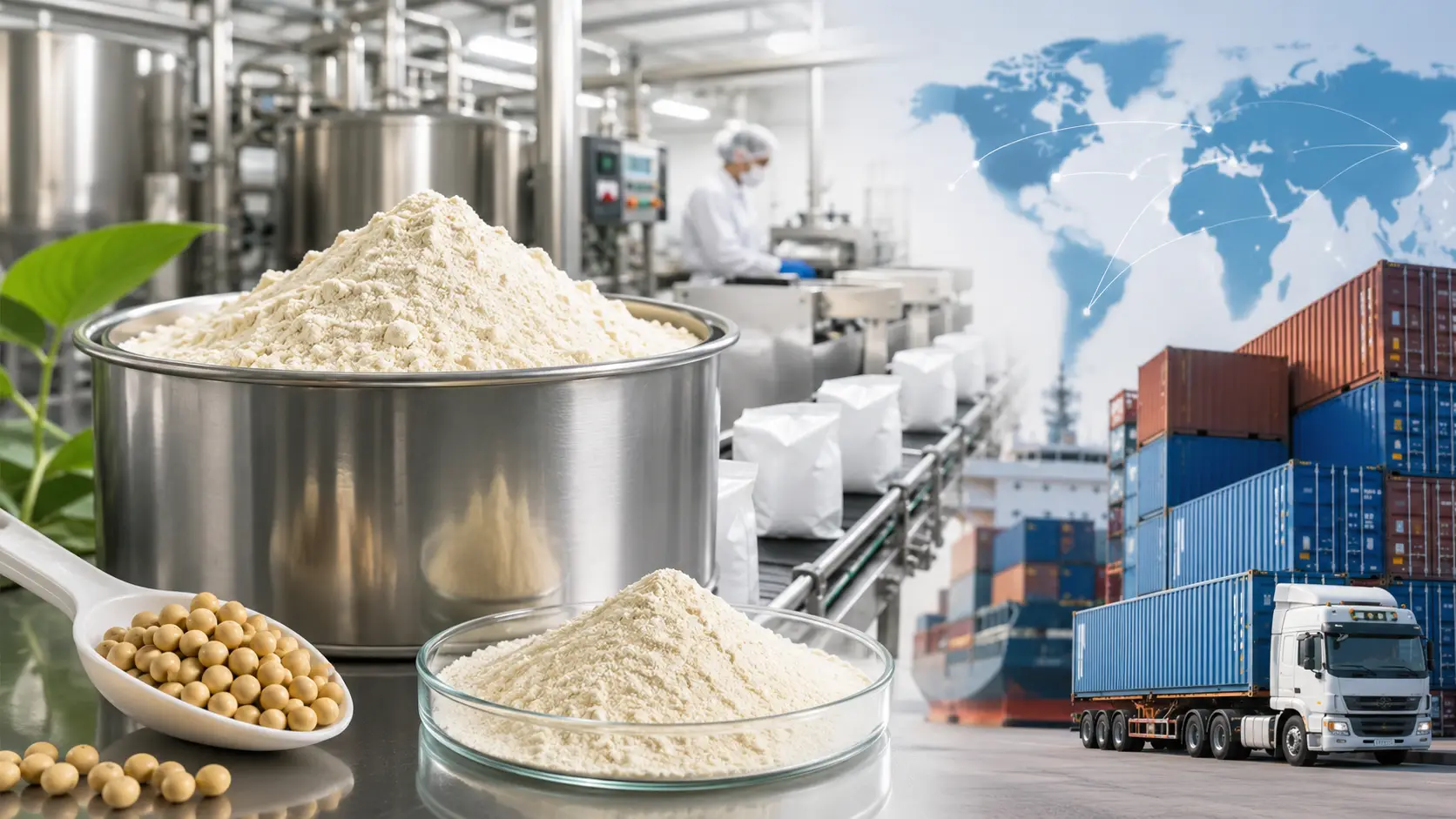
The global supply chain for soy protein isolate depends heavily on soybean production, processing infrastructure, and international trade networks. Major producing regions have developed sophisticated manufacturing capabilities that support large-scale exports.
According to data from the International Trade Centre (ITC), global trade in soy-based ingredients continues to expand as food manufacturers seek diversified protein sources and reliable supply partners. This creates opportunities for traders, distributors, and procurement professionals to secure long-term supply arrangements.
Industrial buyers increasingly seek suppliers that can provide consistent quality and flexible shipment volumes. Supply chain resilience has become a major consideration due to fluctuations in agricultural commodity markets and logistics conditions.
Chemical and ingredient marketplaces play an important role by connecting buyers with verified suppliers and facilitating international sourcing activities.
For manufacturers and distributors, establishing strategic partnerships with dependable suppliers can improve procurement efficiency and reduce supply risks.
The future outlook for soy protein isolate remains positive as protein fortification and plant-based food innovation continue to expand worldwide. Demand growth is expected to be supported by changing dietary habits and increasing investment in alternative protein technologies.
Industry publications from the Good Food Institute suggest that alternative proteins will remain an important segment of global food innovation. Soy protein isolate is expected to retain a strong market position due to its established production base and favorable cost-performance characteristics.
Product innovation is likely to focus on improving flavor, functionality, and sustainability credentials. Manufacturers are also investing in new applications that extend beyond traditional food products.
Emerging markets present additional growth opportunities as consumers seek affordable protein sources and governments encourage food security initiatives.
For suppliers and procurement teams, understanding market trends and building resilient sourcing strategies will remain essential to capturing future opportunities in the soy protein isolate market.
Soy protein isolate has evolved into a strategic ingredient across food manufacturing, nutrition, and specialty applications. Its high protein content, functional performance, and growing demand within plant-based food systems make it an important commodity for industrial buyers.
As global interest in alternative proteins continues to expand, manufacturers, distributors, and procurement teams can benefit from monitoring market developments and securing reliable sourcing partnerships. B2B marketplaces and established supply networks will continue to play a crucial role in connecting buyers with high-quality soy protein isolate suppliers worldwide.
We're committed to your privacy. Tradeasia uses the information you provide to us to contact you about our relevant content, products, and services. For more information, check out our privacy policy.


 English
 Indonesian
 简体字
简体字
 العربية
 Español
 Français
 Português
 日本語
日本語
 한국어
한국어
 Tiếng Việt