Explore our network of country and industry based websites to access localized information, product offerings, and business services across our group.
Log in to start sending quotation requests for any product.
Don't have an account? Sign Up Here
Home Soy Protein Concentrate Global Sourcing Guide for Food and Nutrition Industries
Trade Insights | Supply Chain | 17 June 2026
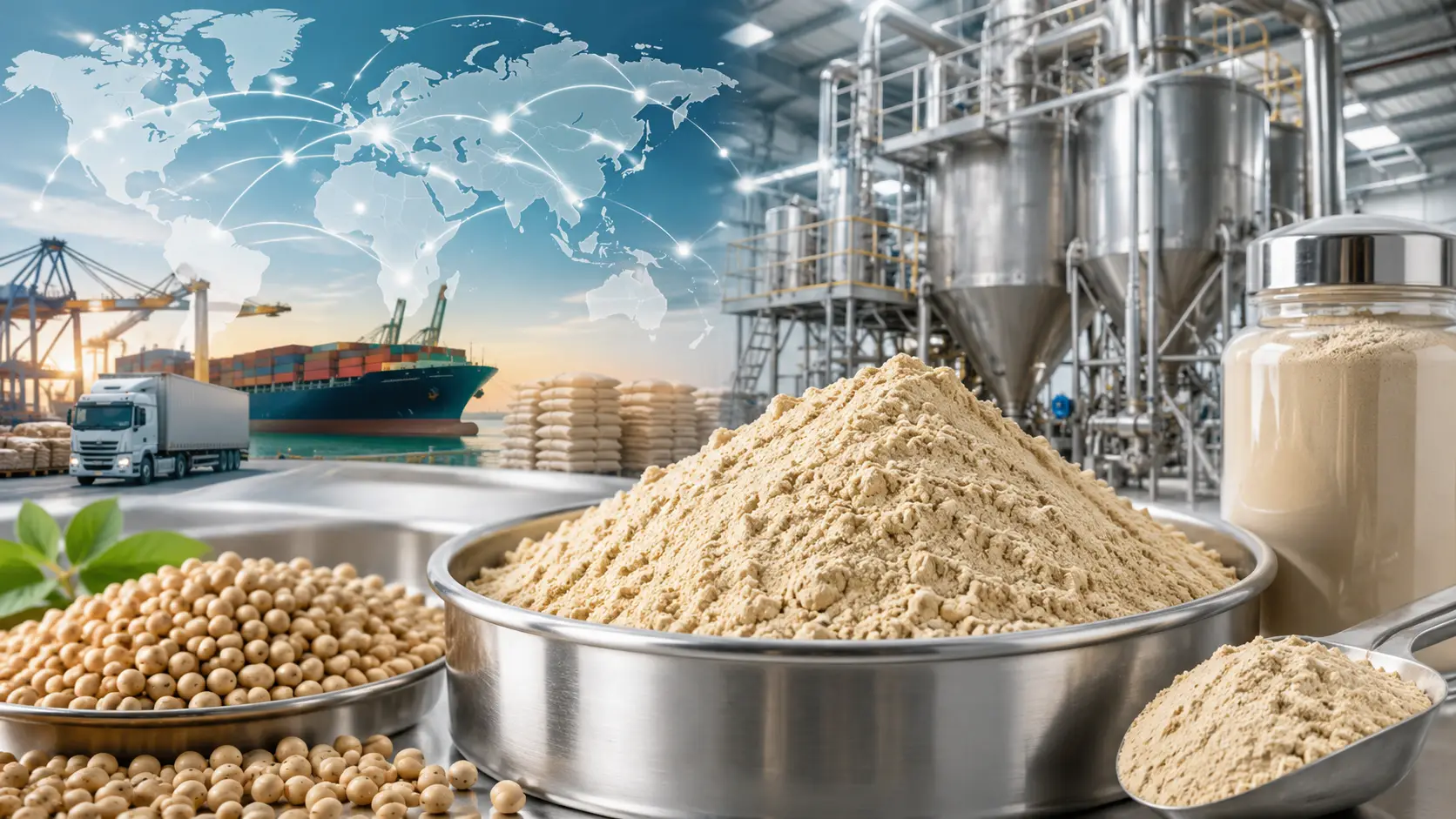
What Is Soy Protein Concentrate?
Industrial Applications of Soy Protein Concentrate
Global Market Trends and Demand Drivers
Buyer Intent and Procurement Considerations
Supply Chain and Global Sourcing Opportunities
Future Outlook for Soy Protein Concentrate Markets
Conclusion
Sources
Soy protein concentrate (SPC) is a plant-derived ingredient produced by removing soluble carbohydrates from defatted soybean flakes while retaining a high protein content, typically around 65–70%. The ingredient has become a strategic raw material because of its nutritional value and functional performance in industrial food applications.
According to the Food and Agriculture Organization, soy proteins are among the most important plant proteins used in global food systems due to their favorable amino acid profile and wide availability. Soy protein concentrate provides emulsification, water retention, and texture improvement, making it highly versatile.
Manufacturers increasingly use SPC because it offers a balance between cost and functionality compared with soy protein isolate. The ingredient can be incorporated into formulations requiring protein enrichment without significantly affecting processing performance.
The growing preference for plant-based ingredients has also elevated the commercial value of soy protein concentrate. Food companies view it as an efficient solution for developing protein-fortified products while maintaining competitive production costs.
Soy protein concentrate serves multiple industrial applications across food manufacturing, nutrition, and animal feed sectors. Its functional properties enable processors to improve product texture, nutritional value, and protein content.
Technical information from the United States Department of Agriculture indicates that soy proteins remain essential ingredients in meat alternatives, bakery products, dairy alternatives, and processed meat applications.
In the food industry, SPC is commonly used in protein bars, beverages, meat extenders, and plant-based foods. Manufacturers appreciate its ability to improve moisture retention and create desirable textures in processed products.
The animal nutrition industry also represents a major application segment. Feed manufacturers use soy protein concentrate in aquaculture and pet food formulations because of its high digestibility and protein efficiency.
As global demand for alternative proteins expands, industrial applications for SPC continue to diversify into specialized nutrition products and functional foods.
Demand for soy protein concentrate has accelerated due to changing dietary habits and increased investment in plant-based nutrition products. Consumer preferences for sustainable proteins are influencing ingredient purchasing strategies worldwide.
Market analysis published by the Good Food Institute highlights continued growth in plant-based foods and alternative proteins, creating new opportunities for soy-derived ingredients.
The expansion of health-conscious consumer segments has increased the use of soy protein concentrate in protein-fortified foods and sports nutrition products. Food manufacturers are responding by reformulating products with plant-based ingredients.
Growing interest in sustainable agriculture and lower environmental impacts compared with animal proteins has also contributed to increasing demand for soy protein ingredients.
Emerging markets in Asia-Pacific, Latin America, and the Middle East are becoming important destinations for suppliers seeking long-term growth opportunities.
Procurement teams purchasing soy protein concentrate typically include food manufacturers, nutritional ingredient distributors, feed producers, and private-label brands. Buyers evaluate both technical and commercial criteria before selecting suppliers.
According to industry sourcing practices published by the International Trade Centre, ingredient buyers increasingly assess quality certifications, supply reliability, and traceability.
Purchasing teams often compare protein content, microbiological specifications, allergen management, and manufacturing standards. Documentation such as certificates of analysis and food safety certifications can significantly influence supplier selection.
Buyers also assess production capacity and logistical capabilities because interruptions in protein ingredient supply can directly affect manufacturing operations.
A detailed product page and transparent sourcing information help procurement teams make informed decisions and shorten supplier qualification processes.
The soy protein concentrate supply chain begins with soybean cultivation and extends through crushing, protein processing, distribution, and international trade. Supply availability is closely linked to global soybean production and processing capacities.
According to the Organisation for Economic Co-operation and Development and the Food and Agriculture Organization, global agricultural trade continues to support increasing demand for protein ingredients and value-added soy products.
Major producing countries have developed integrated soybean processing industries capable of supplying large volumes of soy protein concentrate to international markets.
Manufacturers and distributors increasingly seek diversified sourcing strategies to reduce risks associated with supply disruptions, price volatility, and transportation challenges.
B2B marketplaces provide additional sourcing opportunities by connecting buyers with multiple suppliers, improving market transparency, and supporting procurement efficiency.
The long-term outlook for soy protein concentrate remains positive as protein demand continues to increase across food and nutrition sectors. Investments in plant-based innovation are expected to sustain market growth over the coming years.
Industry reports from the Food and Agriculture Organization suggest that global protein consumption will continue rising due to population growth and changing dietary preferences.
Food manufacturers are expected to expand the use of soy protein concentrate in functional foods, alternative proteins, and nutritional formulations.
Technological improvements in soybean processing may further enhance product functionality and open opportunities in specialized applications requiring higher performance ingredients.
For manufacturers, distributors, and procurement professionals, soy protein concentrate represents both a strategic ingredient and a growing commercial opportunity in global food supply chains.
Soy protein concentrate has evolved from a traditional protein ingredient into an essential component of modern food and nutrition manufacturing. Its versatility, cost efficiency, and functional properties make it attractive across multiple industries.
As demand for plant-based proteins continues to expand, sourcing strategies and supplier partnerships will become increasingly important for buyers seeking supply security and product quality.
Companies that understand market dynamics and establish reliable procurement channels will be better positioned to capitalize on the long-term growth potential of soy protein concentrate.
We're committed to your privacy. Tradeasia uses the information you provide to us to contact you about our relevant content, products, and services. For more information, check out our privacy policy.


 English
 Indonesian
 简体字
简体字
 العربية
 Español
 Français
 Português
 日本語
日本語
 한국어
한국어
 Tiếng Việt



















