Explore our network of country and industry based websites to access localized information, product offerings, and business services across our group.
Log in to start sending quotation requests for any product.
Don't have an account? Sign Up Here
Home Soy Protein Isolate Global Sourcing Guide for Food and Ingredient Buyers
Trade Insights | Supply Chain | 17 June 2026
What Is Soy Protein Isolate?
Industrial Applications of Soy Protein Isolate
Global Market Trends and Demand Drivers
Supply Chain and Manufacturing Landscape
Buyer Intent and Procurement Considerations
Future Opportunities in the Soy Protein Isolate Market
Conclusion
Sources
Soy protein isolate is a highly refined protein ingredient produced by removing most fats and carbohydrates from soybeans, resulting in a product that typically contains more than 90% protein. It has become one of the most important plant-based ingredients used in food processing because of its nutritional value and functional characteristics.
According to the Food and Agriculture Organization, soy proteins contribute significantly to global food security by providing a cost-effective source of high-quality protein. Soy protein isolate offers excellent emulsification, water retention, and gel-forming capabilities, making it suitable for numerous food formulations.
The ingredient is valued by manufacturers because it can improve texture, increase protein content, and support clean-label product development. Its neutral flavor profile and compatibility with various processing techniques further strengthen its commercial appeal.
As consumer interest in plant-based nutrition continues to rise, soy protein isolate has become a strategic ingredient for companies seeking to develop alternative protein products and functional foods.
Soy protein isolate serves a broad range of industrial applications, particularly within food manufacturing, nutrition products, and specialized formulations. Its versatility enables manufacturers to create products with enhanced nutritional and functional properties.
Technical information published by the United States Department of Agriculture highlights the increasing role of soy ingredients in protein-enriched foods and meat alternatives. Soy protein isolate is extensively used in plant-based meat analogues, dairy alternatives, nutritional beverages, bakery products, protein bars, and infant nutrition products.
The ingredient is also used in sports nutrition and clinical nutrition formulations due to its favorable amino acid profile and digestibility. Food manufacturers appreciate its ability to enhance texture while supporting protein claims on packaging.
Beyond human food applications, soy protein isolate is increasingly being incorporated into specialized animal nutrition products and pet foods that require high-quality plant proteins.
The global soy protein isolate market has experienced substantial growth due to changing dietary preferences and increasing consumer awareness regarding sustainability and health. Demand for plant-based proteins continues to expand across developed and emerging economies.
Market analysis published by the Grand View Research indicates that the plant-based protein sector is expected to maintain strong growth over the coming years. Rising consumer demand for vegan products, flexitarian diets, and functional nutrition products has significantly increased the use of soy protein isolate.
Manufacturers are responding by expanding production capacity and developing innovative protein-based formulations to meet changing consumer preferences. Investments in alternative protein technologies are also driving new application opportunities.
The ingredient's cost competitiveness compared with some alternative proteins continues to support its widespread adoption among food producers and ingredient manufacturers.
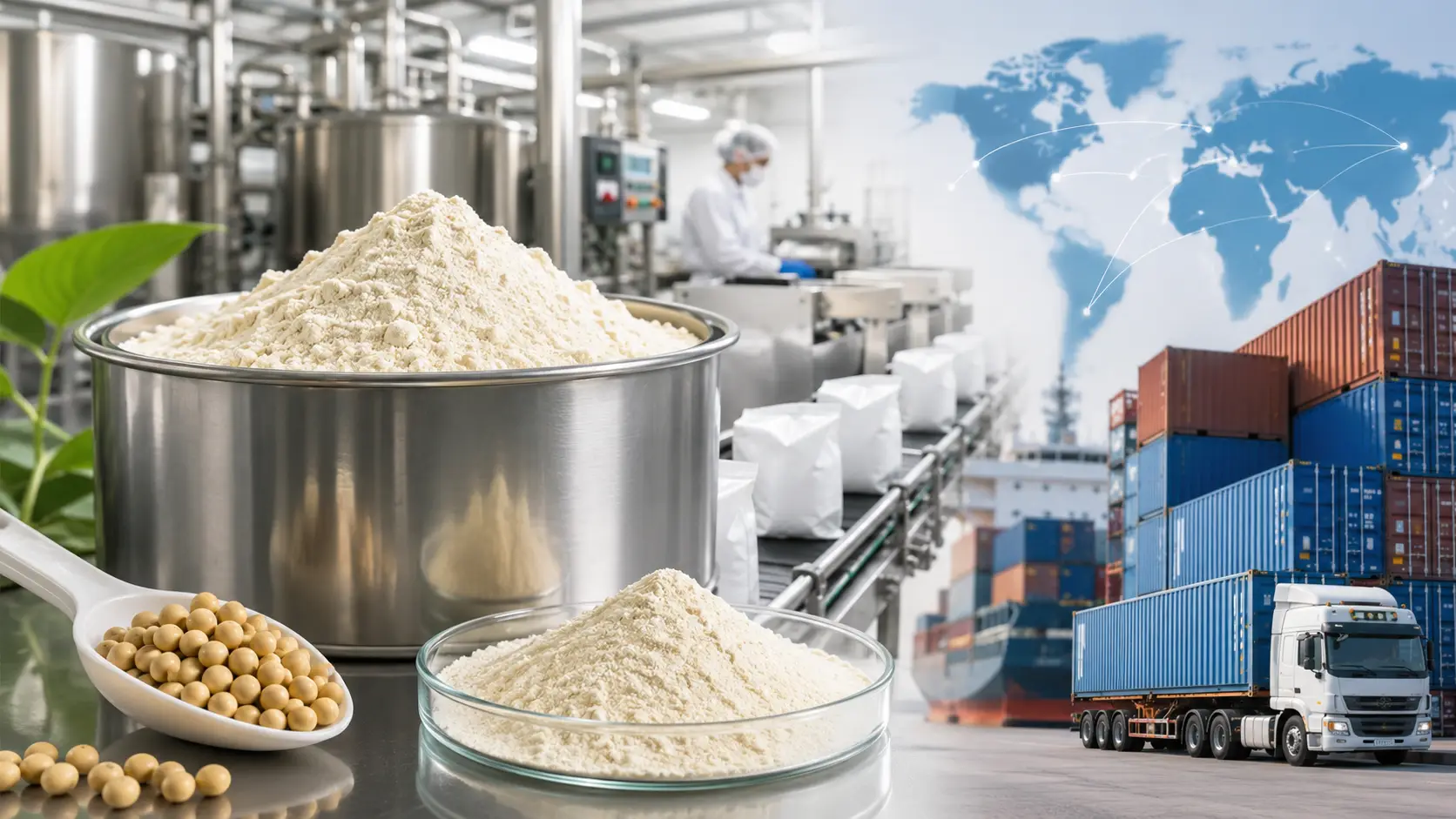
The soy protein isolate supply chain begins with soybean cultivation and extends through processing, refining, packaging, and global distribution. Supply chain efficiency plays an important role in maintaining product quality and ensuring stable availability.
According to data from the International Trade Centre, international trade in soy-based ingredients remains highly active due to growing demand from food and nutrition industries. Major producing countries include the United States, China, Brazil, and India, which collectively account for significant volumes of soybean processing.
Manufacturers and distributors increasingly prioritize supply chain transparency, sustainability certifications, and traceability initiatives to address customer requirements and regulatory expectations.
Global buyers also evaluate supplier reliability, quality consistency, production capacity, and logistical capabilities when sourcing soy protein isolate in bulk quantities.
Soy protein isolate is primarily purchased by food manufacturers, nutritional supplement producers, ingredient distributors, and companies developing plant-based products. Procurement decisions often involve both technical and commercial evaluations.
According to guidance from the Institute of Food Technologists, ingredient sourcing increasingly focuses on quality assurance and application performance. Procurement teams typically assess protein concentration, microbiological specifications, allergen management, certifications, and consistency of supply.
Buyers compare suppliers to secure competitive pricing, reliable delivery schedules, and long-term partnerships that can support production planning and product innovation.
Product pages on B2B chemical marketplaces simplify sourcing decisions by providing technical specifications, supply availability information, and direct communication channels with suppliers and distributors.
The future outlook for soy protein isolate remains positive as manufacturers continue investing in protein innovation and sustainable food solutions. New applications are emerging as consumer preferences evolve.
Industry reports from the Good Food Institute indicate continued investment in alternative proteins and ingredient technologies. Soy protein isolate is expected to remain a major component of plant-based foods because of its functionality, scalability, and cost efficiency.
Opportunities are also expanding in personalized nutrition, functional beverages, high-protein snacks, and specialized nutrition products designed for aging populations and active lifestyles.
As global demand for sustainable protein sources grows, soy protein isolate is likely to remain a strategic ingredient for manufacturers, traders, and procurement teams seeking dependable plant-based protein solutions.
Soy protein isolate has established itself as a critical ingredient in the global food and nutrition industry. Its exceptional protein content, functional versatility, and cost competitiveness make it attractive for a wide range of industrial applications.
According to multiple industry sources, demand for plant-based proteins is expected to continue increasing as manufacturers develop innovative products and consumers prioritize health and sustainability. This trend is strengthening the long-term outlook for soy protein isolate across numerous end-use sectors.
For procurement teams, selecting reliable suppliers with strong quality management systems and robust supply chains remains essential to ensuring consistent production performance.
As the market evolves, B2B marketplaces will continue to play an increasingly important role by connecting buyers with manufacturers, traders, and distributors of soy protein isolate worldwide.
Food and Agriculture Organization (FAO)
We're committed to your privacy. Tradeasia uses the information you provide to us to contact you about our relevant content, products, and services. For more information, check out our privacy policy.


 English
 Indonesian
 简体字
简体字
 العربية
 Español
 Français
 Português
 日本語
日本語
 한국어
한국어
 Tiếng Việt



















