Explore our network of country and industry based websites to access localized information, product offerings, and business services across our group.
Log in to start sending quotation requests for any product.
Don't have an account? Sign Up Here
Home Global Market Expansion of Betaine Anhydrous Across Key Industries
Trade Insights | Applications and Buyers | 22 June 2026
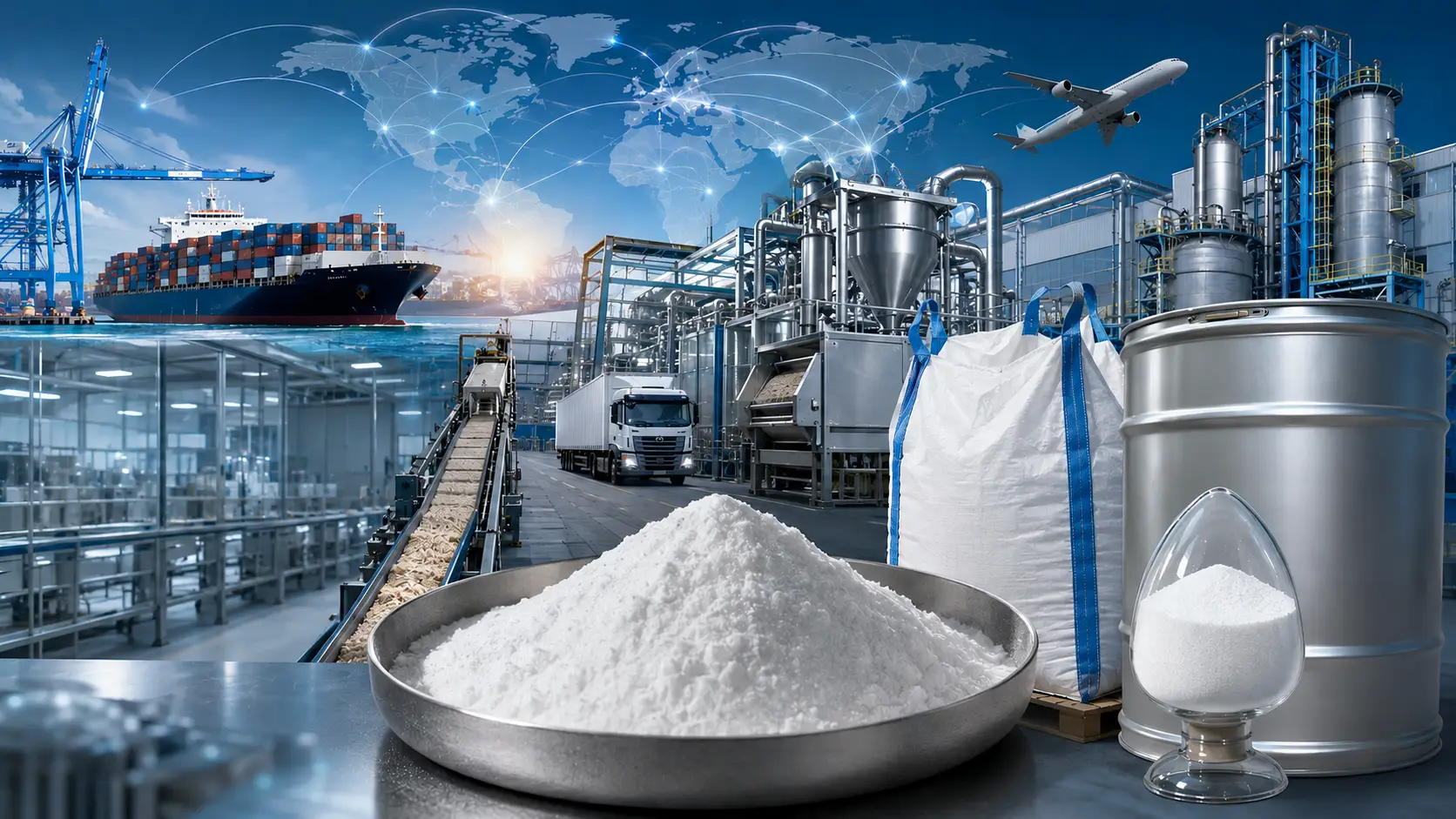
Market Overview of Betaine Anhydrous
Chemical Properties and Functional Mechanism
Applications in Animal Nutrition and Feed Industry
Role in Food & Beverage Formulations
Cosmetics and Personal Care Applications
Nutraceutical and Pharmaceutical Uses
Global Supply Chain and Sourcing Considerations
Sources
Betaine anhydrous, also known as trimethylglycine, is a naturally occurring compound widely used across animal feed, food processing, and personal care formulations. Its multifunctional properties as an osmolyte and methyl donor have positioned it as a strategic ingredient in multiple industrial value chains. According to the U.S. National Institutes of Health (NIH), betaine plays a key role in cellular hydration and metabolic processes, driving its demand in both nutrition and health-related applications.
The global market is witnessing steady expansion due to increasing demand for functional feed additives and clean-label ingredients. In animal nutrition, betaine is used to enhance feed efficiency and stress resistance, while in cosmetics it is valued for hydration and skin conditioning properties. Industry reports from the European Food Safety Authority (EFSA) highlight its safety profile, further supporting regulatory acceptance across regions.
Growth is also influenced by the rising focus on sustainable and performance-enhancing additives in livestock production. Feed manufacturers and ingredient distributors are increasingly integrating betaine anhydrous into formulations to improve cost efficiency and animal productivity.
Overall, betaine anhydrous has evolved from a niche additive to a mainstream multifunctional ingredient across global industries.
Within the global chemical supply chain, betaine anhydrous occupies a unique position as both a specialty ingredient and a bulk trade commodity. Its sourcing is closely tied to sugar beet processing and natural extraction routes, making agricultural supply stability an important factor in pricing and availability.
Market analysis published by OECD indicates that demand for functional amino acid derivatives, including betaine, is growing in line with advanced nutrition systems and sustainable production models. This reinforces its role in modern industrial ecosystems.
Procurement teams prioritize consistency, purity, and certification compliance when sourcing betaine anhydrous. These factors significantly influence supplier selection in B2B marketplaces such as Tradeasia and Chemtradeasia.
As global trade networks expand, betaine continues to strengthen its position as a cross-industry ingredient with stable long-term demand.
Betaine anhydrous is a zwitterionic compound with high solubility in water, making it suitable for a wide range of formulation systems. Its chemical stability under varying pH conditions enhances its usability across feed, food, and cosmetic applications. According to the Journal of Agricultural and Food Chemistry, betaine’s molecular structure enables efficient methyl donation in metabolic pathways.
It typically appears as a white crystalline powder and is highly hygroscopic, which supports its role in hydration-related applications. This property is particularly valuable in skin care formulations and animal feed moisture balance systems.
In industrial processing, betaine anhydrous is favored for its compatibility with other amino acids and feed additives. It integrates well into premix formulations without destabilizing other active components.
Its physical and chemical robustness makes it a reliable ingredient for high-performance industrial applications.
The primary functional role of betaine anhydrous lies in osmoprotection and methyl group donation. In biological systems, it helps regulate cell volume and protects against environmental stress. According to NIH biochemical research data, this mechanism supports liver function and metabolic efficiency.
In industrial applications, this translates into improved feed conversion ratios in livestock and enhanced hydration in cosmetic products. Its dual functionality bridges nutrition science and formulation engineering.
Manufacturers value betaine for its ability to reduce stress impacts in animals exposed to heat, transport, or intensive production environments.
This multifunctional behavior makes it an essential additive in modern performance-oriented industries.
Betaine anhydrous is widely used in animal nutrition to improve feed efficiency and support growth performance. It acts as a methyl donor, reducing the metabolic burden on essential nutrients such as methionine and choline. According to FAO livestock nutrition studies, betaine supplementation contributes to improved weight gain and feed conversion efficiency.
Poultry, swine, and aquaculture industries are major consumers of feed-grade betaine. It helps animals maintain osmotic balance under heat stress conditions, improving survival and productivity rates.
Feed producers incorporate betaine into premixes to enhance nutritional value without significantly increasing feed cost. This makes it a cost-effective additive in large-scale production systems.
Its functional benefits align with modern precision nutrition strategies in the global livestock industry.
One of the most critical roles of betaine anhydrous in animal feed is stress mitigation. Heat stress, transportation, and high-density farming conditions can negatively impact animal health and productivity. Research published by the Journal of Animal Science confirms betaine’s role in reducing physiological stress markers in livestock.
By stabilizing osmotic pressure in cells, betaine supports hydration and electrolyte balance. This improves feed intake and reduces mortality rates in sensitive production environments.
Its metabolic support function also enhances protein synthesis efficiency, contributing to better carcass quality and yield.
These benefits make betaine a key ingredient in modern animal nutrition strategies focused on sustainability and performance.
In the food industry, betaine anhydrous is used as a functional ingredient due to its mild flavor profile and nutritional benefits. It is often incorporated into fortified foods, energy drinks, and dietary supplements. According to EFSA food additive evaluations, betaine is considered safe for use within regulated limits.
Its role as a methyl donor supports metabolic health, making it suitable for functional food development. Food manufacturers use it to enhance nutritional value without altering taste significantly.
It also contributes to moisture retention in processed foods, improving texture and shelf stability.
These properties make it valuable in clean-label and health-focused product formulations.
Betaine is increasingly used in beverage formulations, particularly in sports and energy drinks. Its hydration-supporting properties make it attractive for performance nutrition products. Industry insights from MarketsandMarkets indicate growing demand for functional beverages containing bioactive compounds like betaine.
It supports endurance and hydration balance, making it suitable for active lifestyle consumers.
Manufacturers also use betaine in powdered drink mixes and nutraceutical beverages due to its solubility and stability.
This expanding application base strengthens its position in the global food and beverage sector.
In cosmetics, betaine anhydrous is widely used for its moisturizing and skin-conditioning properties. It acts as a humectant, helping retain moisture in skin and hair formulations. According to Cosmetics Europe safety assessments, betaine is a well-tolerated cosmetic ingredient with broad formulation compatibility.
It is commonly used in shampoos, conditioners, lotions, and facial cleansers. Its ability to improve skin feel and reduce irritation makes it suitable for sensitive skin products.
Formulators value its natural origin and multifunctional performance in personal care systems.
This supports its integration into premium skincare and haircare product lines.
Betaine enhances the stability and sensory profile of cosmetic formulations. It works synergistically with surfactants and emulsifiers, improving product texture and performance.
Its osmoprotective properties help protect skin cells from dehydration and environmental stress.
This makes it particularly useful in anti-aging and hydration-focused cosmetic products.
As consumer demand for natural and effective ingredients grows, betaine continues to gain importance in personal care innovation.
Betaine anhydrous is widely used in nutraceutical formulations due to its role in liver health and metabolic function. According to NIH dietary supplement research, betaine supports homocysteine metabolism, which is linked to cardiovascular health.
It is commonly included in capsules, tablets, and powder supplements aimed at improving overall wellness.
Nutraceutical manufacturers value its scientifically supported benefits and regulatory acceptance in multiple markets.
This has contributed to its growing adoption in global supplement formulations.
In pharmaceutical research, betaine is studied for its potential role in metabolic and liver-related therapies. Its methyl donation function is critical in biochemical pathways associated with detoxification.
Research institutions continue to explore its therapeutic potential in metabolic disorders and liver function support.
Its safety profile enhances its suitability for long-term dietary applications.
This positions betaine as a promising compound in both preventive and functional health sectors.
Betaine anhydrous is primarily derived from sugar beet processing, making agricultural supply chains a key factor in global availability. According to industry data from OECD agricultural reports, sugar beet production directly influences betaine supply stability.
Extraction and purification processes determine product grade and suitability for feed, food, or cosmetic use.
Manufacturers must ensure compliance with purity standards depending on end-use requirements.
This makes sourcing strategy critical for procurement teams.
Buyers in the B2B chemical market evaluate suppliers based on consistency, certification, and supply reliability. Factors such as ISO certification, feed-grade compliance, and food safety standards are essential in procurement decisions.
Distributors and manufacturers rely on trusted marketplaces like Chemtradeasia and Tradeasia for stable sourcing.
Price volatility and logistics efficiency also influence supplier selection.
These considerations shape global trade dynamics for betaine anhydrous.
https://www.efsa.europa.eu
https://www.nih.gov
https://www.fao.org
We're committed to your privacy. Tradeasia uses the information you provide to us to contact you about our relevant content, products, and services. For more information, check out our privacy policy.


 English
 Indonesian
 简体字
简体字
 العربية
 Español
 Français
 Português
 日本語
日本語
 한국어
한국어
 Tiếng Việt



















