Explore our network of country and industry based websites to access localized information, product offerings, and business services across our group.
Log in to start sending quotation requests for any product.
Don't have an account? Sign Up Here
Home Global L-Valine Supply Chain and Sourcing Guide for B2B Buyers
Trade Insights | Supply Chain | 22 June 2026
Overview of L-Valine and Industrial Relevance
L-Valine Production Pathways and Fermentation Technology
Applications in Animal Nutrition and Feed Formulation
Pharmaceutical and Nutraceutical Uses of L-Valine
Global Market Trends, Demand Drivers, and Supply Chain Dynamics
B2B Sourcing Considerations and Procurement Strategy
Sources
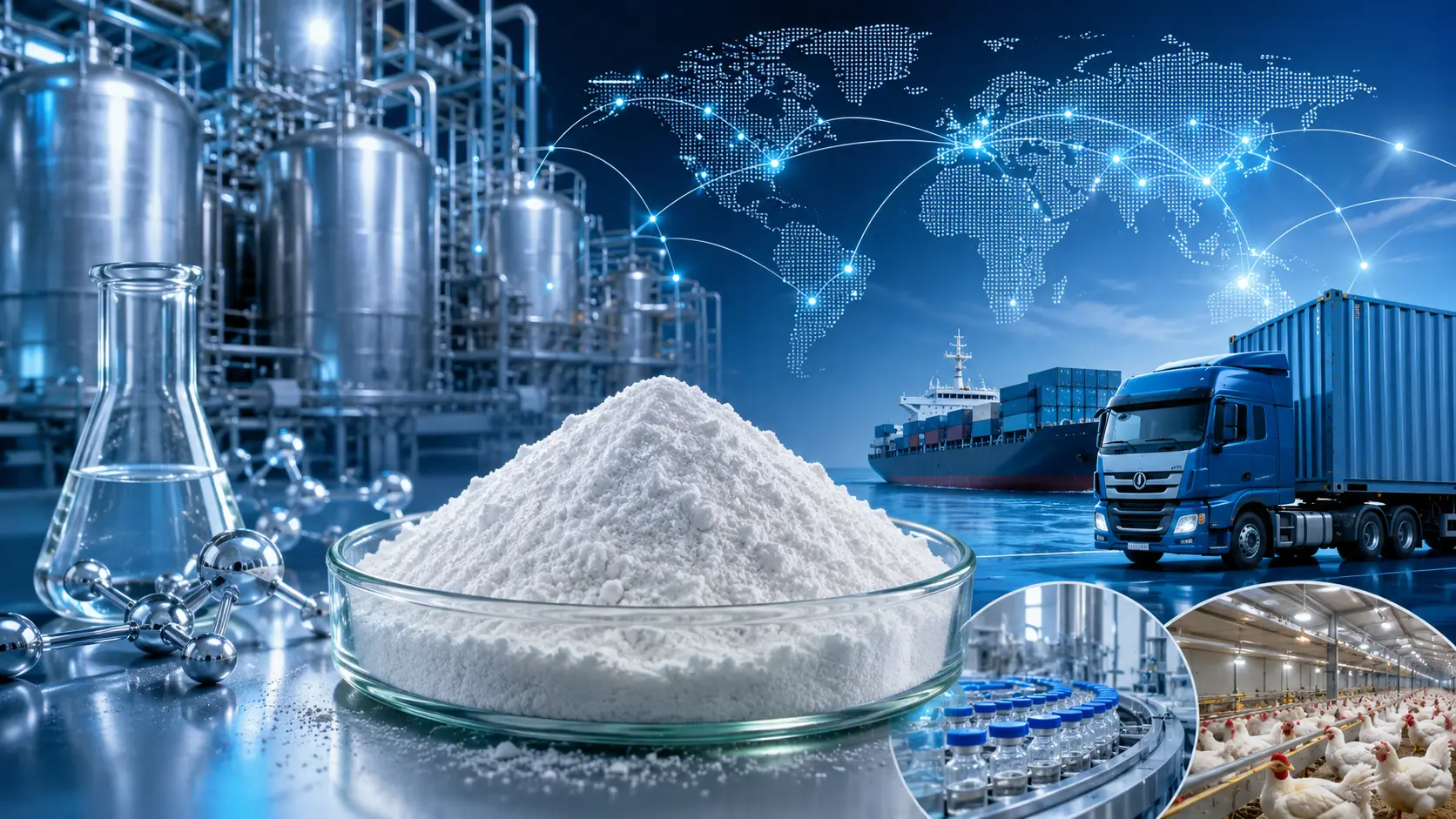
L-Valine is a branched-chain essential amino acid widely used in industrial biotechnology, feed formulation, and pharmaceutical manufacturing. It cannot be synthesized naturally by animals, making it a critical dietary supplement in controlled nutrition systems. According to the U.S. National Institutes of Health (NIH), valine plays a key role in muscle metabolism, tissue repair, and nitrogen balance regulation.
From a B2B perspective, L-Valine is primarily sourced as a bulk biochemical ingredient. It is commonly produced through microbial fermentation processes to meet industrial-grade purity requirements. Its demand continues to rise due to its multifunctional applications across livestock nutrition and human health sectors.
L-Valine is classified as a high-value amino acid within the broader amino acid market, which is increasingly driven by efficiency-focused feed and pharmaceutical production systems. The Food and Agriculture Organization (FAO) highlights amino acids as essential for optimizing feed conversion ratios in livestock production.
Its relevance extends beyond agriculture into biomanufacturing, where it serves as a precursor in biochemical synthesis. This dual functionality makes L-Valine strategically important in global supply chains, particularly for manufacturers seeking cost-efficient protein alternatives.
In industrial trade, L-Valine is positioned as a specialty amino acid with stable demand from large-scale feed mills and pharmaceutical formulators. Its pricing and availability are closely tied to fermentation feedstock costs and global amino acid production capacity.
As global protein demand increases, L-Valine continues to gain importance in precision nutrition strategies. Industry analysis from OECD-FAO agricultural outlook reports confirms sustained growth in amino acid-based feed optimization.
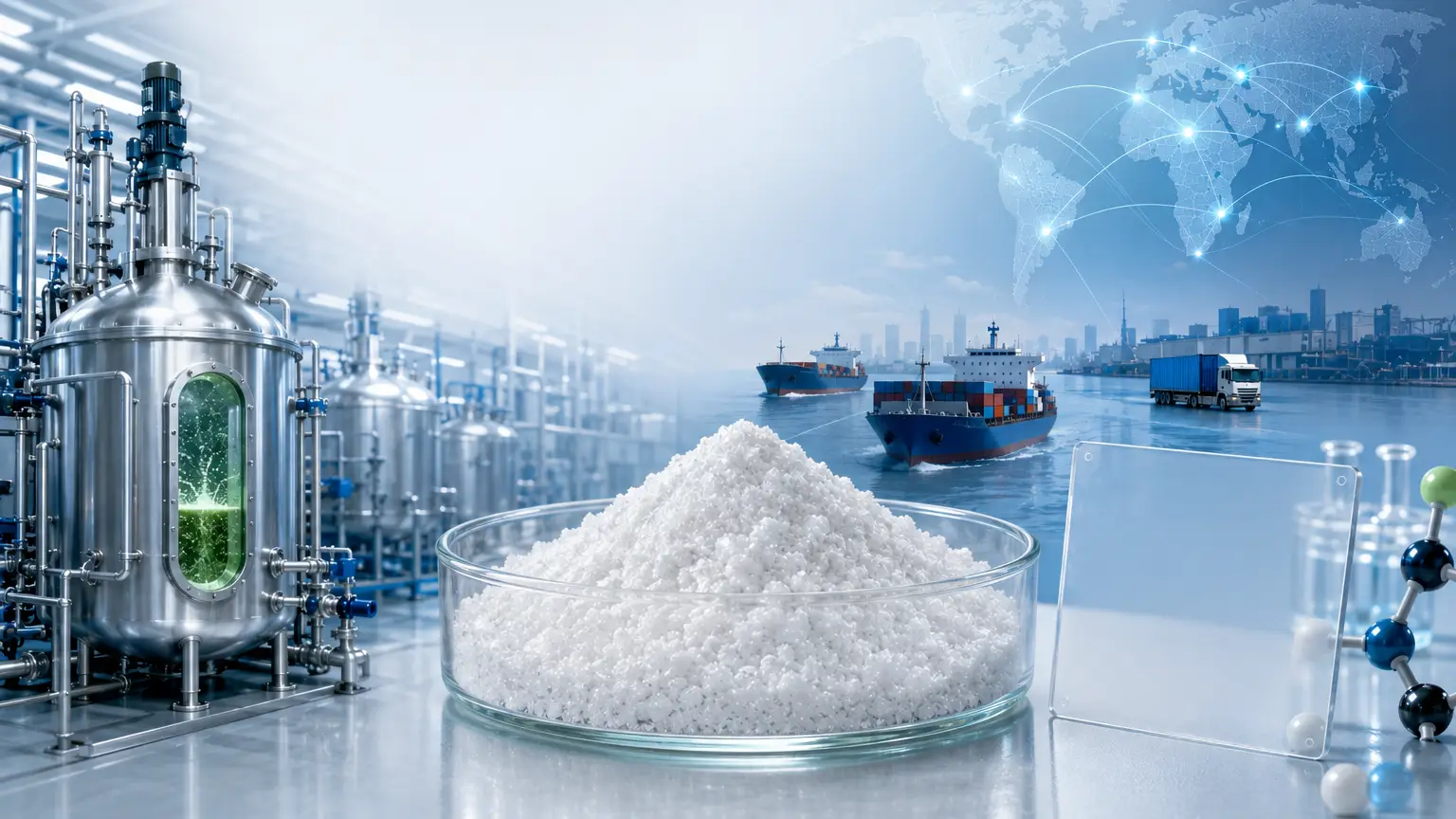
Modern L-Valine production relies heavily on microbial fermentation using engineered strains of bacteria such as Corynebacterium glutamicum. This process allows for high-yield and cost-efficient production compared to traditional chemical synthesis methods. According to research published in biotechnology journals such as Applied Microbiology and Biotechnology, fermentation remains the dominant industrial production route.
The process involves glucose-based substrates and controlled bioreactor environments to optimize amino acid yield. This makes production scalable for global supply chains serving feed and pharma industries.
After fermentation, L-Valine undergoes separation, crystallization, and purification steps to achieve industrial-grade quality. These downstream processes are critical for ensuring compliance with pharmaceutical and feed safety standards.
Industry standards from regulatory bodies such as the European Food Safety Authority (EFSA) emphasize strict purity thresholds for amino acids used in animal nutrition. This ensures consistent product quality across international markets.
Recent advancements in metabolic engineering have significantly improved fermentation efficiency for L-Valine production. Companies are increasingly adopting strain optimization techniques to enhance yield and reduce production costs.
This technological evolution is reshaping global supply chains, enabling more competitive pricing and stable supply availability for B2B buyers across multiple industries.
L-Valine is widely used in animal feed formulations to support muscle development, growth rate optimization, and feed efficiency. It is especially important in poultry and swine nutrition, where amino acid balance directly impacts production outcomes.
According to FAO animal nutrition guidelines, branched-chain amino acids like valine are essential for improving protein synthesis efficiency in intensive livestock systems.
Feed manufacturers incorporate L-Valine to reduce dependency on high-cost protein sources such as soybean meal. By balancing amino acid profiles, producers can achieve improved feed conversion ratios.
Market research from global agricultural studies indicates that optimized amino acid supplementation reduces overall feed costs while maintaining performance standards in commercial livestock production systems.
L-Valine is typically integrated into premix formulations alongside other amino acids like lysine and methionine. This combination ensures balanced nutritional profiles tailored to species-specific requirements.
Feed industry standards emphasize precision formulation, making L-Valine an essential component in advanced animal nutrition strategies.
L-Valine is one of the three branched-chain amino acids (BCAAs) essential for human health. It supports muscle tissue repair and energy metabolism, particularly under physical stress conditions.
The National Institutes of Health (NIH) identifies valine as critical for maintaining nitrogen balance and supporting metabolic functions in humans.
In pharmaceutical formulations, L-Valine is used in intravenous nutrition solutions and clinical dietary supplements. It is particularly important in recovery treatments for patients with protein deficiencies.
Clinical nutrition guidelines published in medical journals emphasize the role of amino acid supplementation in patient recovery and metabolic stabilization.
The nutraceutical industry has expanded demand for L-Valine in sports nutrition and dietary supplements. It is commonly used in combination with other BCAAs to support muscle recovery and endurance performance.
This growing consumer-driven demand is influencing pharmaceutical-grade amino acid supply chains globally.
The global amino acid market is experiencing steady growth due to increasing demand in animal nutrition and healthcare applications. According to market research from OECD and industry analysts, amino acid consumption is projected to rise with global protein demand.
L-Valine benefits directly from this expansion as feed and pharma industries shift toward optimized nutrient efficiency systems.
Global production of L-Valine is concentrated in major biochemical manufacturing hubs in Asia, particularly China and Southeast Asia. These regions benefit from integrated fermentation infrastructure and raw material availability.
This geographic concentration creates both efficiency advantages and supply chain risk considerations for global buyers.
L-Valine pricing is influenced by glucose feedstock costs, energy prices, and fermentation efficiency. Market volatility in agricultural commodities can indirectly impact amino acid production economics.
Industry procurement reports highlight the importance of long-term supplier contracts to stabilize cost fluctuations.
B2B buyers of L-Valine typically evaluate suppliers based on purity levels, production consistency, and regulatory compliance. Certifications such as GMP, ISO, and feed-grade approvals are critical procurement criteria.
According to global procurement standards in the chemical industry, supplier reliability is as important as product specifications in long-term sourcing decisions.
Companies sourcing L-Valine must consider supply chain risks such as geopolitical disruptions, raw material shortages, and logistics constraints. Diversification of suppliers is a common strategy used by procurement teams.
Industry sourcing frameworks recommend multi-origin procurement strategies to ensure continuity of supply.
Digital B2B chemical marketplaces play an increasingly important role in connecting buyers with verified L-Valine suppliers. These platforms improve transparency and reduce procurement cycle times.
For industrial buyers, access to verified supplier networks ensures better pricing, faster negotiation, and improved supply chain visibility.
https://www.efsa.europa.eu
https://www.fao.org
https://www.nih.gov
We're committed to your privacy. Tradeasia uses the information you provide to us to contact you about our relevant content, products, and services. For more information, check out our privacy policy.


 English
 Indonesian
 简体字
简体字
 العربية
 Español
 Français
 Português
 日本語
日本語
 한국어
한국어
 Tiếng Việt