Explore our network of country and industry based websites to access localized information, product offerings, and business services across our group.
Log in to start sending quotation requests for any product.
Don't have an account? Sign Up Here
Home Soy Protein Concentrate Sourcing Guide for Global Food and Feed Manufacturers
Trade Insights | Applications and Buyers | 17 June 2026
What Is Soy Protein Concentrate?
Industrial Applications of Soy Protein Concentrate
Global Market Trends and Demand Drivers
Key Buyer Groups and Procurement Considerations
Sourcing Soy Protein Concentrate in the Global Market
Future Opportunities and Market Outlook
Sources
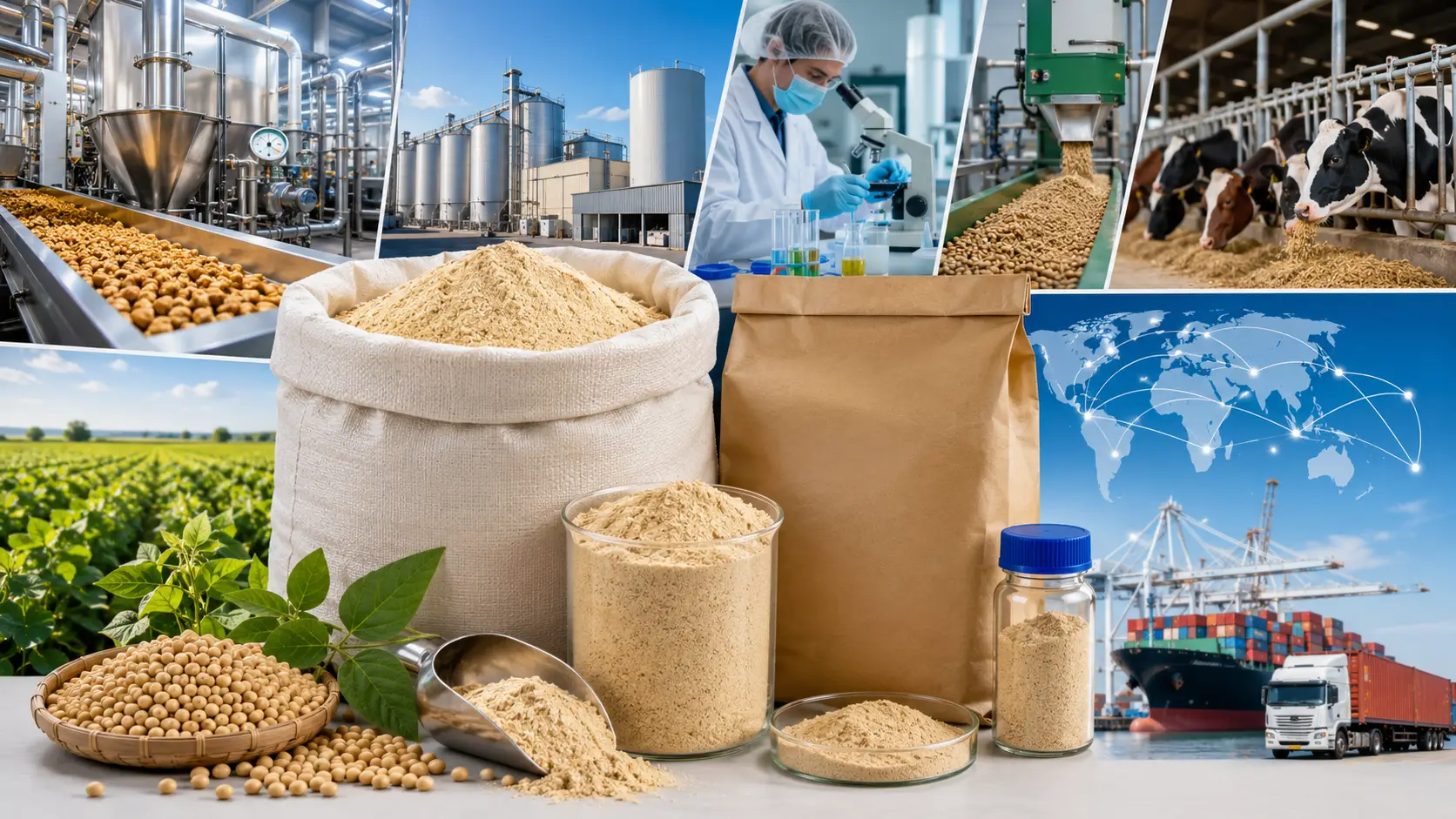
Soy protein concentrate (SPC) is a plant-derived protein ingredient produced by removing soluble carbohydrates from defatted soybean flakes while retaining a high percentage of protein. The ingredient typically contains around 65–70% protein and has become an important component in food and feed formulations due to its nutritional profile and functional properties.
The production process of soy protein concentrate involves alcohol extraction, acid leaching, or aqueous extraction methods to reduce sugars and improve protein concentration. According to technical information published by the United States Department of Agriculture (USDA), soybean proteins are among the most widely utilized plant proteins because of their favorable amino acid profile and versatile functionality.
The ingredient offers emulsification, water retention, and texture enhancement properties, making it suitable for a wide range of industrial applications. Manufacturers increasingly rely on soy protein concentrate as an economical alternative to animal proteins and higher-purity protein isolates.
Its balance between functionality and cost has positioned soy protein concentrate as a preferred ingredient in numerous processing industries where protein enrichment and product stability are essential.
The versatility of soy protein concentrate has led to its widespread use in food processing and animal nutrition industries. Demand continues to grow as manufacturers seek sustainable and cost-effective protein ingredients.
In the food industry, soy protein concentrate is used in meat products, bakery applications, dairy alternatives, protein beverages, and plant-based foods. According to the Food and Agriculture Organization (FAO), plant proteins are increasingly incorporated into processed foods to meet changing dietary preferences and protein demand.
In animal nutrition, soy protein concentrate is widely utilized in aquaculture feed, pet food, calf milk replacers, and specialty livestock diets due to its high digestibility and reduced anti-nutritional factors compared with conventional soybean meal.
The ingredient also contributes to texture improvement, nutritional fortification, and protein enhancement in finished products. These functional benefits continue to support its growing adoption across various manufacturing sectors.
As global food systems evolve toward more sustainable protein solutions, soy protein concentrate is expected to remain an important ingredient in both human and animal nutrition applications.
The market for soy protein concentrate is influenced by changing dietary preferences, the expansion of alternative protein products, and increasing demand for efficient feed ingredients.
According to market analysis published by major research firms including Grand View Research and MarketsandMarkets, global plant protein consumption continues to expand due to increasing consumer awareness of sustainability, nutrition, and protein diversification.
The rise of plant-based meat alternatives and protein-fortified foods has created new opportunities for soy protein concentrate suppliers and manufacturers. Food companies increasingly require reliable protein ingredients that provide functional performance and cost efficiency.
In the feed sector, aquaculture and premium pet food industries are driving demand for high-quality soy-derived proteins. Producers seek ingredients with consistent nutritional profiles and improved digestibility to optimize feed performance.
These demand drivers are expected to support steady growth in the global soy protein concentrate market over the coming years, creating additional opportunities for international suppliers and distributors.
Understanding buyer requirements is essential for suppliers and distributors operating in the soy protein concentrate market. Purchasing decisions are often influenced by quality standards, pricing, and supply chain reliability.
The primary buyers include food manufacturers, plant-based food producers, feed manufacturers, pet food companies, nutraceutical producers, and ingredient distributors. According to industry data from the United Soybean Board, soy-derived ingredients continue to gain importance in value-added food and feed applications.
Procurement teams typically evaluate protein content, microbiological specifications, product certifications, allergen management, and country of origin before making purchasing decisions. Supply consistency and technical support are also critical considerations.
Buyers compare suppliers to ensure competitive pricing, stable inventories, and compliance with international food safety and feed regulations. Product documentation and quality assurance systems often play a decisive role during supplier selection.
A well-structured product page on a B2B chemical marketplace helps buyers evaluate specifications, request quotations, compare suppliers, and streamline sourcing decisions in global markets.
Global sourcing strategies have become increasingly important as manufacturers seek stable access to high-quality protein ingredients and diversified supply chains.
Leading soy protein concentrate producers are concentrated in major soybean-producing regions, including North America, South America, and Asia. According to USDA agricultural trade reports, international soybean processing capacity continues to expand to support global protein demand.
Buyers increasingly prefer suppliers capable of providing technical documentation, regulatory compliance information, and customized packaging solutions. Reliable logistics and inventory management have become major competitive advantages in the international ingredients trade.
The growth of digital B2B marketplaces has simplified supplier discovery and quotation processes, enabling procurement teams to identify new sourcing opportunities more efficiently.
For distributors and manufacturers, maintaining multiple sourcing channels and building long-term supplier relationships helps reduce procurement risks and improve supply chain resilience.
The future of soy protein concentrate is closely tied to developments in plant-based nutrition, sustainable food systems, and advanced animal nutrition solutions.
According to industry forecasts and food innovation reports, demand for plant-based protein ingredients is expected to continue expanding as manufacturers invest in alternative protein technologies and high-protein food products.
New applications are emerging in sports nutrition, functional foods, nutritional beverages, and specialized animal feed formulations. These developments create opportunities for ingredient suppliers to expand into higher-value market segments.
Sustainability initiatives are also encouraging food companies to adopt plant-derived ingredients with lower environmental impacts compared with traditional animal proteins. Soy protein concentrate aligns with these objectives by providing a scalable and economically viable protein source.
As global demand for protein continues to rise, soy protein concentrate is likely to remain an essential ingredient for food and feed manufacturers, creating long-term opportunities for producers, traders, and procurement professionals worldwide.
We're committed to your privacy. Tradeasia uses the information you provide to us to contact you about our relevant content, products, and services. For more information, check out our privacy policy.


 English
 Indonesian
 简体字
简体字
 العربية
 Español
 Français
 Português
 日本語
日本語
 한국어
한국어
 Tiếng Việt